Three-zone Thermal Shock Test Chambers
Three-zone Thermal Shock Test Chambers consists of a high-temperature zone, a low-temperature zone, and a test zone. The sample stays stationary in the test area, preventing any mechanical impact from movement. This setup is ideal for applications sensitive to vibration.

Application Fields of the Thermal Shock Test Chamber
The three-zone thermal shock test chamber is a specialized environmental testing system designed to evaluate products under extreme temperature conditions. It serves a wide range of industries. Common applications include:
- Automotive Industry: Assessing the performance and reliability of vehicle components, systems, and materials under both high and low temperature extremes.
- Aerospace Industry: Verifying the durability and stability of aerospace equipment and instruments in harsh temperature conditions to ensure dependable operation during flight.
- Electronics Industry: Testing electronic components to confirm consistent performance and reliability across fluctuating temperature environments.
- Machinery and Equipment Manufacturing: Evaluating industrial machinery and components for endurance and reliability when exposed to severe temperature changes in real-world operating conditions.
The three-zone thermal shock test chamber simulates rapid temperature fluctuations to assess an item’s performance, reliability, and long-term durability in conditions that reflect actual use.

Test Standards for the Thermal Shock Test Chamber
Key performance parameters of the three-zone thermal shock test chamber typically include temperature range, control system, chamber size, heating and cooling time, temperature fluctuation, and temperature uniformity.
The chamber complies with several international testing standards, including:
- RTCA DO-160: Environmental conditions and test procedures for airborne equipment
- SAE J1211: Environmental system performance testing for automotive electronic devices
- IEC 60068-2-14: Environmental testing – Part 2-14: Test N – Temperature change
- ISO 14971: Application of risk management to medical devices
- ISO 16750: Environmental conditions and testing for electrical and electronic equipment in road vehicles
- IEC 60917: Modular design standards for mechanical structures in electronic equipment
The two-zone thermal shock test chamber also meets standards such as IEC 61587-1, IEC 60601-1, IEC 60335-1, and IEC 60721.
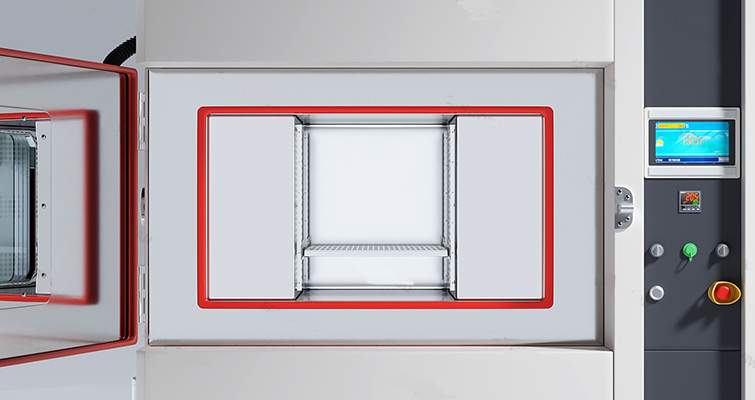
Control System of Thermal Shock Test Chambers
Qualitest's thermal shock test chambers feature advanced control systems built with industry-leading hardware and software to ensure stable operation under preset conditions. These systems provide accurate and reliable data to support precise control and monitoring of test environments.
- Controller: Equipped with the TEMI 1500 controller and a control system. Includes RS232, RS485, and Ethernet communication ports.
- Programmable Control: Allows users to configure and run customized test programs, including heating, cooling, and dwell times. Supports scheduled power-on functionality.
- Multi-Language Support: Interface available in English and other languages.
- Remote Monitoring: Utilizes SAMWON-EZNET network technology for real-time remote control. Users can monitor the chamber anytime, with alerts and updates sent via email to PCs and mobile devices.
Note: Control system features may vary by model. Always consult the Qualitest Environmental Test Chamber Manual and follow safety procedures before operation.

Refrigeration System of the Thermal Shock Test Chamber
The refrigeration system is a critical component of the thermal shock test chamber, directly impacting the accuracy and consistency of test results.
- Advanced Defrost Technology: Qualitest’s proprietary hot air refrigerant defrost system melts frost from the evaporator by injecting high-temperature, high-pressure refrigerant vapor into the internal heat exchanger. This prevents frost buildup and significantly reduces energy consumption.
- High-Quality Components: The refrigeration unit features components from globally recognized brands. Qualitest collaborates with Japan and the U.S to develop EPV and XUP series quick-opening solenoid valves, designed for long-lasting, energy-efficient performance (service life over 15 years). Development is also underway on the next-generation Danfoss AKV electronic expansion valve system for enhanced efficiency.
- Energy-Efficient Operation: The refrigeration layout is optimized using VRF (Variable Refrigerant Flow) technology, combined with PID-based cold-end output control. This allows low-temperature operation with up to 30% energy savings.
- Modular System Design: The modular approach minimizes failure points, reduces the number of welded joints, increases cooling efficiency, improves reliability, and simplifies maintenance with lower repair costs.

