Metallographic Cutting Consumables
Buying Guide
| Product Name | Specifications | Package | Application Range |
|---|
| Diamond Cutting Discs (Edge Electroplated) | φ100x0.4x12.7mm | Bulk Packaging | The saw blades are manufactured using edge electroplating technology and are widely used for precision cutting of thin and small workpieces made from crystals, ceramics, glass, and alloy materials. |
| φ150x0.5x12.7mm |
| Diamond Cutting Discs (Edge Sintered) | φ100x0.5x20mm | Bulk Packaging | The saw blades are produced using edge sintering technology, ensuring high precision and long service life. They are specifically designed for precision cutting of hard alloys, ceramics, optical glass, and other brittle metallic materials. |
| φ200x1x32mm |
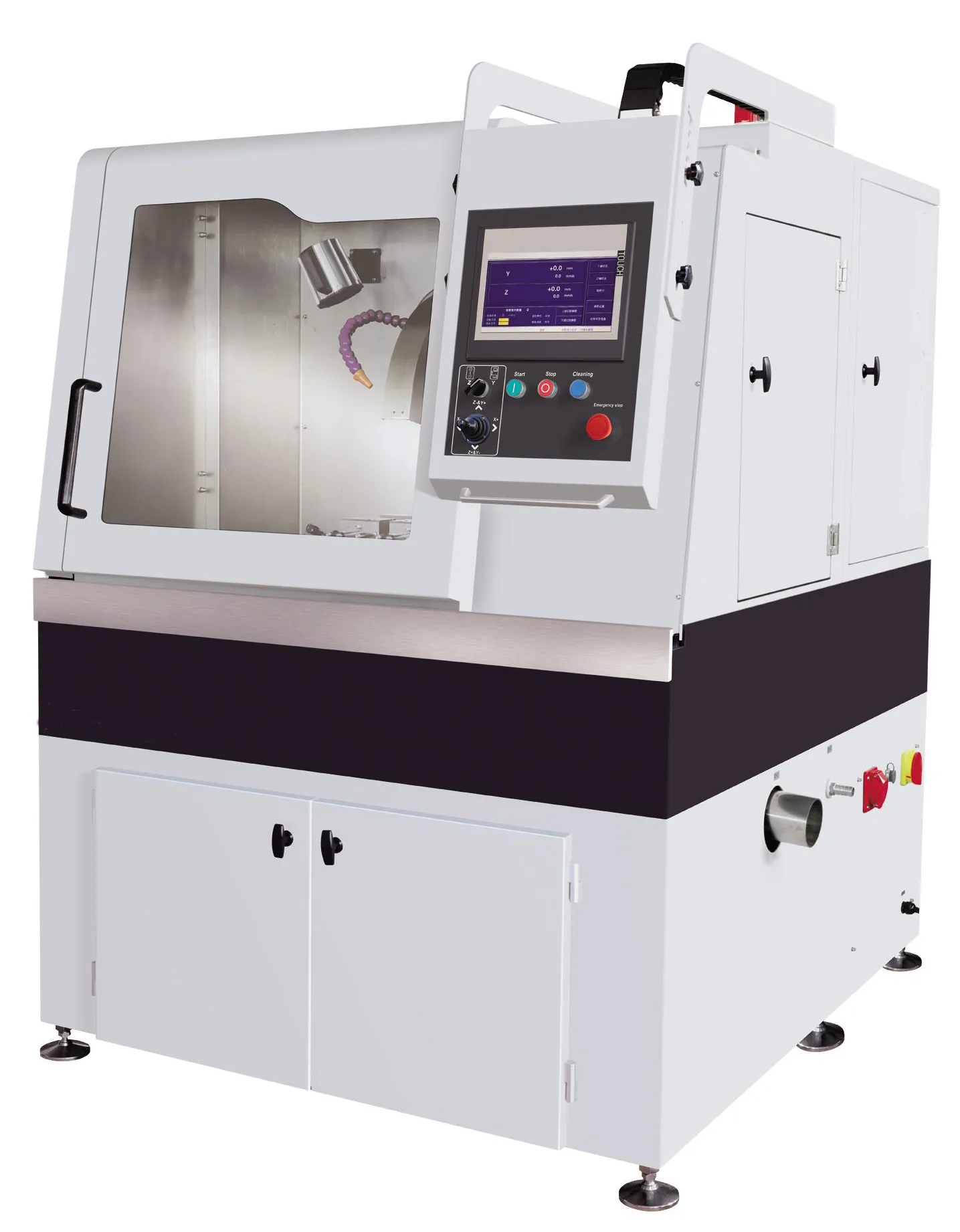 | Specialized metallographic cutting piece (resin)For metallographic sample preparation, selecting the right grinding wheel cut-off blade is essential. The choice should be based on the material type and hardness of the samples to improve cutting efficiency and reduce potential damage. We recommend using our eco-friendly cooling and lubricating fluid, designed specifically for metallographic cut-off applications. This fluid delivers superior cooling, lubrication, and rust protection. It helps control sample temperature to prevent heat-related effects, extends the service life of cut-off blades, and provides both cleaning and rust protection for the samples. Advantages- Available in a wide range of specifications, compatible with both domestic and international metallographic cutting machines.
- Manufactured to German technical standards with high-quality abrasives.
- Combines durability with strong self-sharpening properties, delivering excellent value and performance.
- Produces smooth, polished surfaces while ensuring clean, burn-free cutting.
|
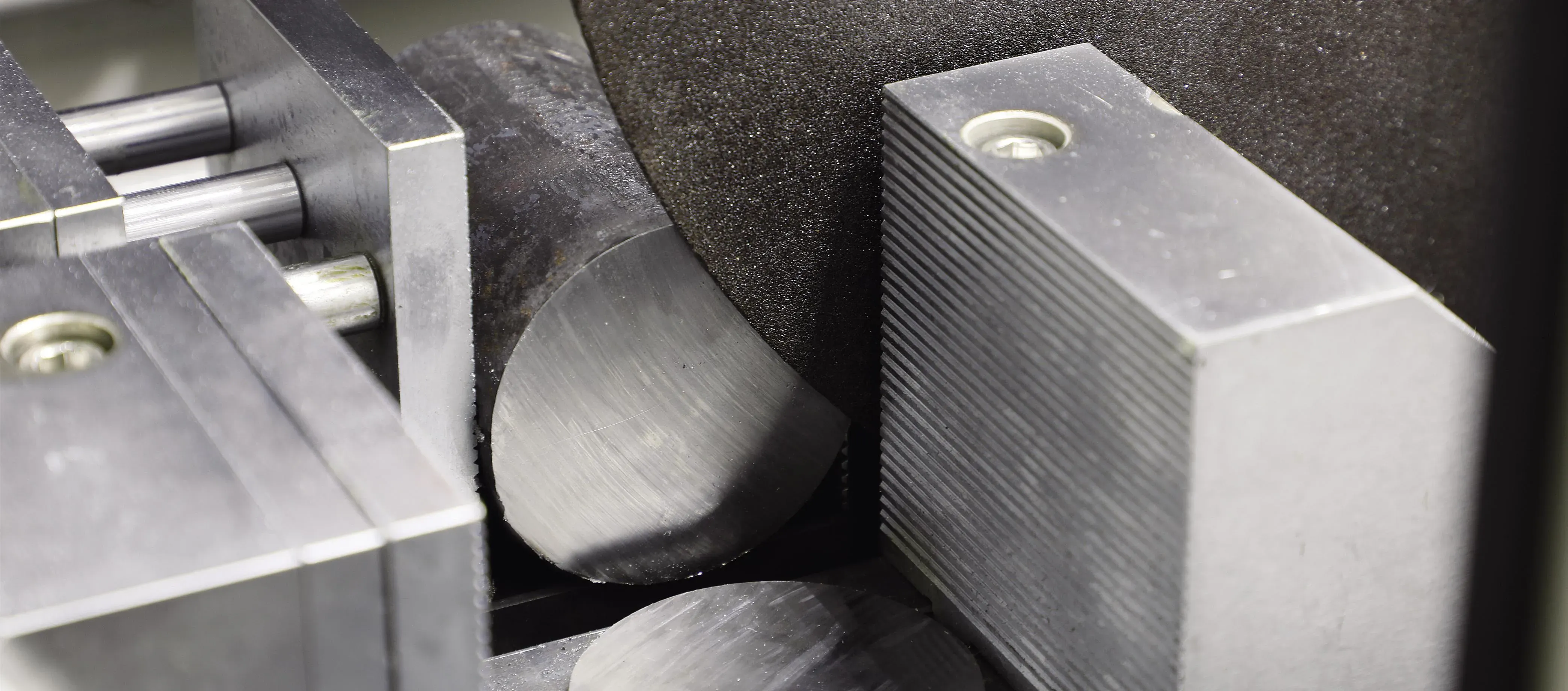
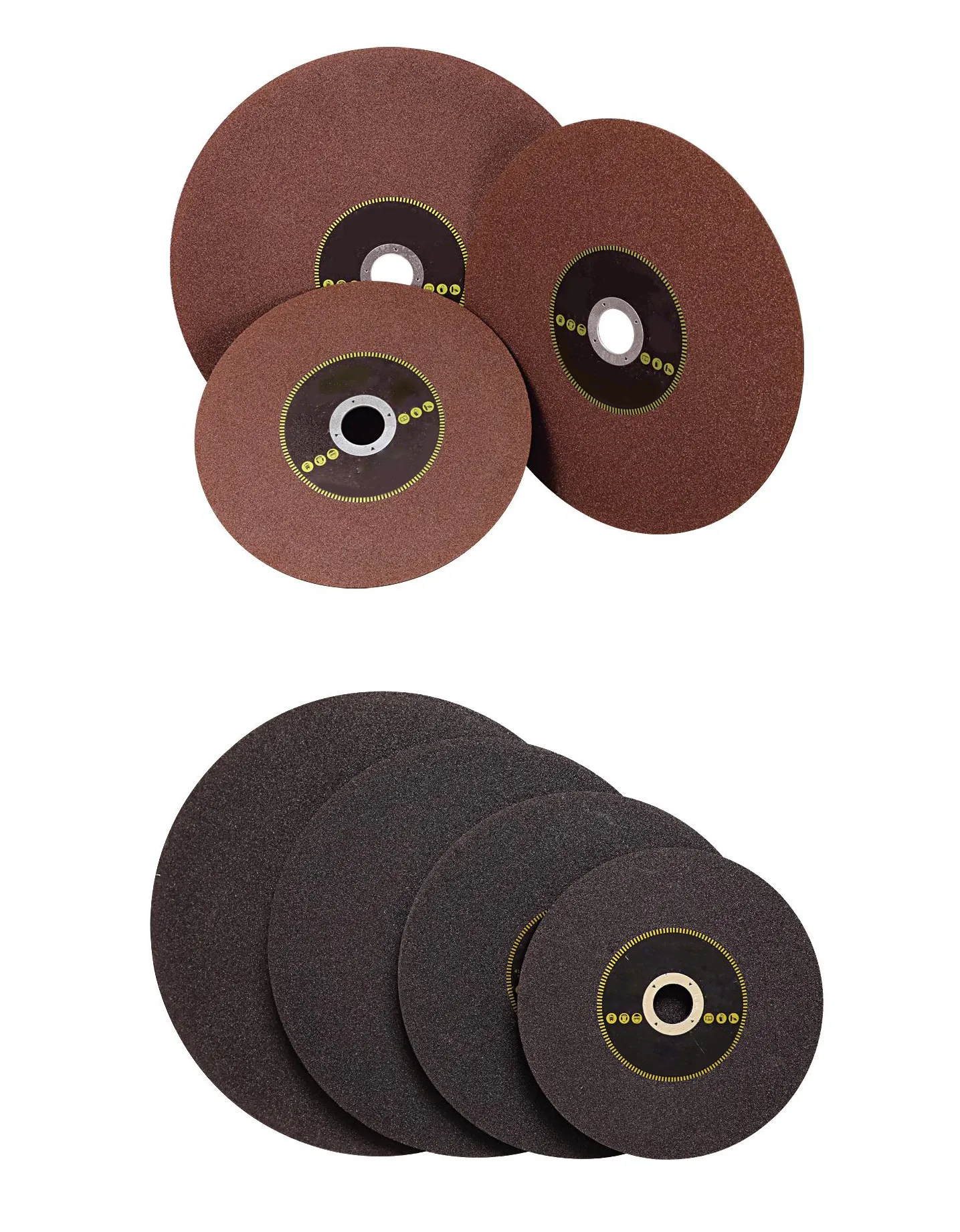 | Selection table for metallographic resin cutting discsStable Performance
Metallographic cutting disc delivers consistent performance through careful material selection and advanced processing. It is made with high-purity abrasive grains and industrial-grade fine resin. Strict control over particle size distribution and formulation, combined with advanced mixing and single-step forming technology, ensures uniform density, flatness, and durability. The result is fast, smooth cutting, a precise and controlled kerf, and a bright, clean surface. Precision Cutting
Using a single-step forming process with no backing material, the disc incorporates a high-strength bond that ensures flatness, strength, and thinness. Even at minimal thickness, it can withstand high cutting torque without vibration, allowing for accurate positioning and precise cutting. Durable. Efficient. Cost-Effective.
The combination of high-purity abrasives and refined processing techniques enhances disc durability. Selecting the right disc ensures high-quality specimen preparation while minimizing additional preparation steps. This significantly reduces both preparation time and overall costs. |
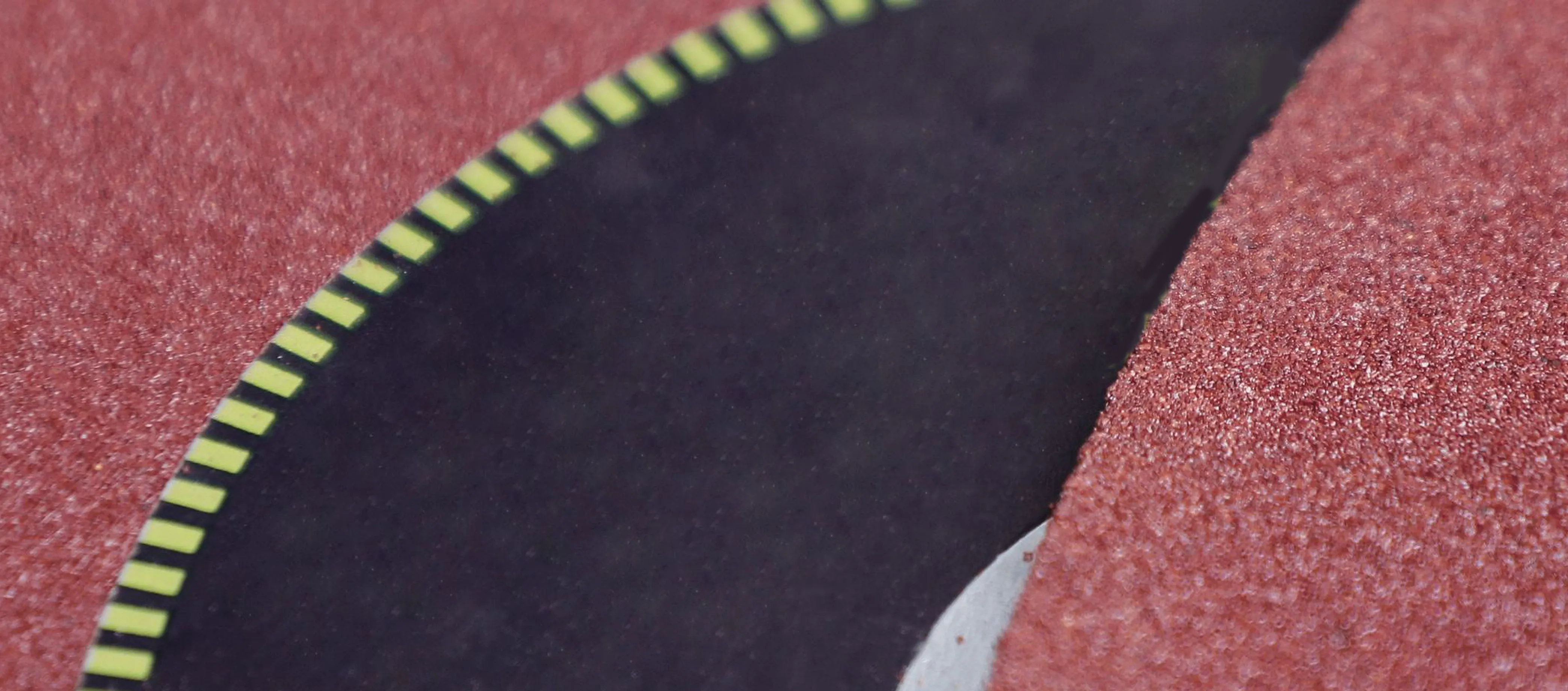
Cutting Disc Model Selection Table
| Cutting disc model | Application | HV Hardness Value |
|---|
| 30 | 50 | 80 | 120 | 180 | 250 | 350 | 500 | 700 | 900 |
|---|
| 10Rxx | Soft non-ferrous metals | | | | | | | |
| High toughness metal (Ti) | | | | | | | |
| 20Rxx | Soft ferrous metals | | | | | | | | |
| 30Rxx | Medium hardness ferrous metals | | | | | | | | |
| 40Rxx | Medium hardness ferrous metals | | | | | | | | |
| 50Rxx | Hardness in ferrous metals | | | | | | | |
| 60Rxx | High hardness ferrous metals | | | | | | | | |
Analysis of Cutting Disc Models
Note:
R represents soft metals
Z represents medium hardness metals
Y represents high hardness metals
Example of cutting disc selection: 50Z35
50 | Z | 35 |
Rockwell hardness (HRC)
of the specimen. | Medium hardness
metals | The diameter of the
cutting disc is 350mm. |
Specifications of the Cutting Disc
| Material | Model | Specifications (mm) | Package | Product features | Applicability |
|---|
| Silicon carbide | R | 10R25 | Φ250×1.5×32 | 60Piece/box | Product hardness: relatively hard
Suitable for cutting material hardness: HRC10-35
Wear rate: durable | Hard alloys, non-ferrous metals, titanium alloys. |
| Φ250×2×32 | 50Piece/box |
| 10R30 | Φ300×2×32 | 50Piece/box |
| 10R35 | Φ350×2.5×32 | 40Piece/box |
| 20R25 | Φ250×1.5×32 | 60Piece/box |
| Φ250×2×32 | 50Piece/box |
| 20R30 | Φ300×2×32 | 50Piece/box |
| 20R35 | Φ350×2.5×32 | 40Piece/box |
| 30R25 | Φ250×1.5×32 | 60Piece/box |
| Φ250×2×32 | 50Piece/box |
| 30R30 | Φ300×2×32 | 50Piece/box |
| 30R35 | Φ350×2.5×32 | 40Piece/box |
| Coating with sapphire | Z | 40Z25 | Φ250×1.5×32 | 60Piece/box | Product hardness: moderate
Suitable for cutting material hardness: HRC35-55
Wear rate: durable | Ductile cast iron, malleable cast iron
High-phosphorus cast iron, alloy cast iron
Bearing steel and quenched steel. |
| Φ250×2×32 | 50Piece/box |
| 40Z30 | Φ300×2×32 | 50Piece/box |
| 40Z35 | Φ350×2.5×32 | 40Piece/box |
| 50Z25 | Φ250×1.5×32 | 60Piece/box |
| Φ250×2×32 | 50Piece/box |
| 50Z30 | Φ300×2×32 | 50Piece/box |
| 50Z35 | Φ350×2.5×32 | 40Piece/box |
| Single crystal sapphire | Y | 60Y25 | Φ250×1.5×32 | 60Piece/box | Product hardness: relatively soft
Suitable for cutting material hardness: above HRC55
Wear rate: moderate | High-quality carbon steel, alloy tools
Steel, alloy structural steel, carbon tool steel, stainless steel, bearing steel, and quenched steel. |
| Φ250×2×32 | 50Piece/box |
| 60Y30 | Φ300×2×32 | 50Piece/box |
| 60Y35 | Φ350×2.5×32 | 40Piece/box |
| Coating with sapphire | General-purpose | Φ400×2.8×32 | 25Piece/box | Product hardness: moderate
Suitable for cutting material hardness: HRC20-50
Wear rate: moderate | Ductile iron, malleable cast iron
High-phosphorus cast iron, alloy cast iron
Unquenched steel, etc. |
| Φ450×3.2×32 | 20Piece/box |
| Φ508×4×38.1 | 10Piece/box |
| Φ610×4×38.1 | 10Piece/box |
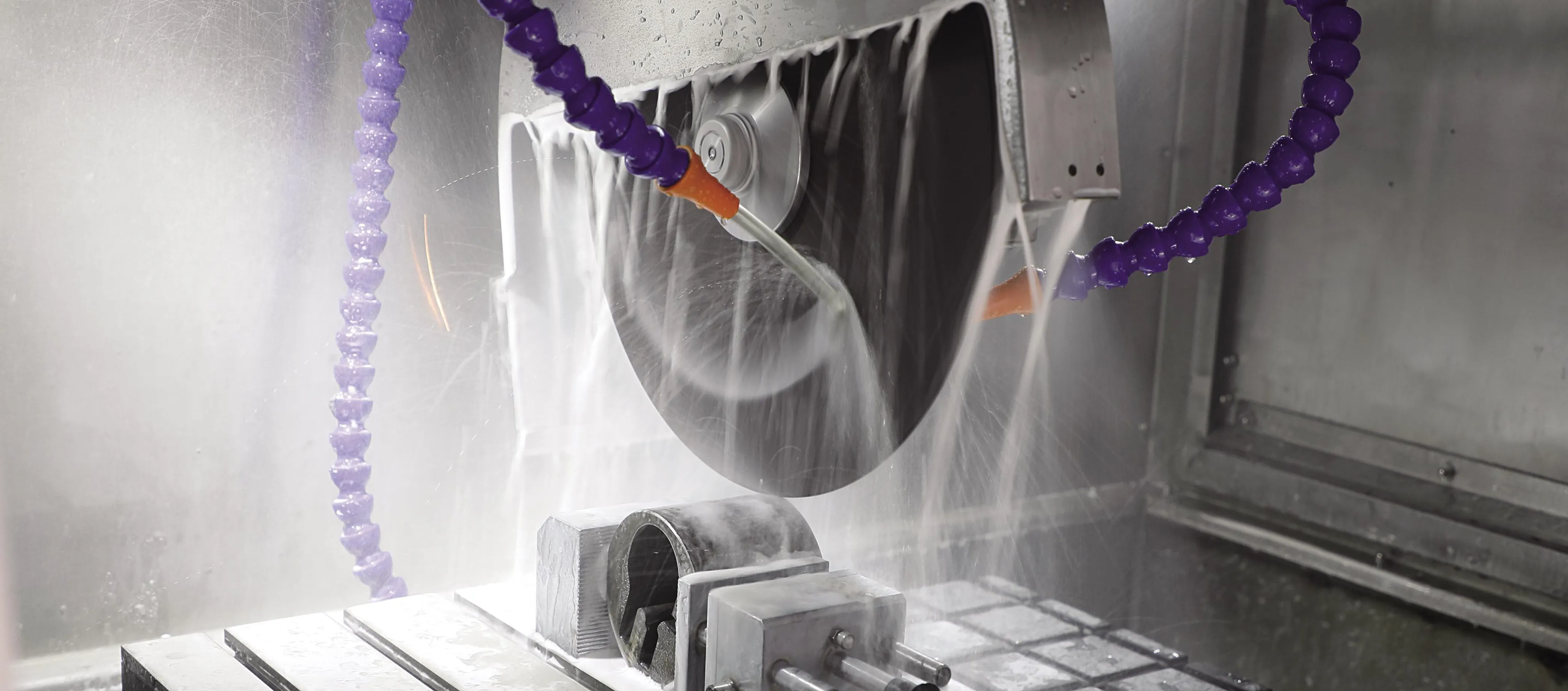
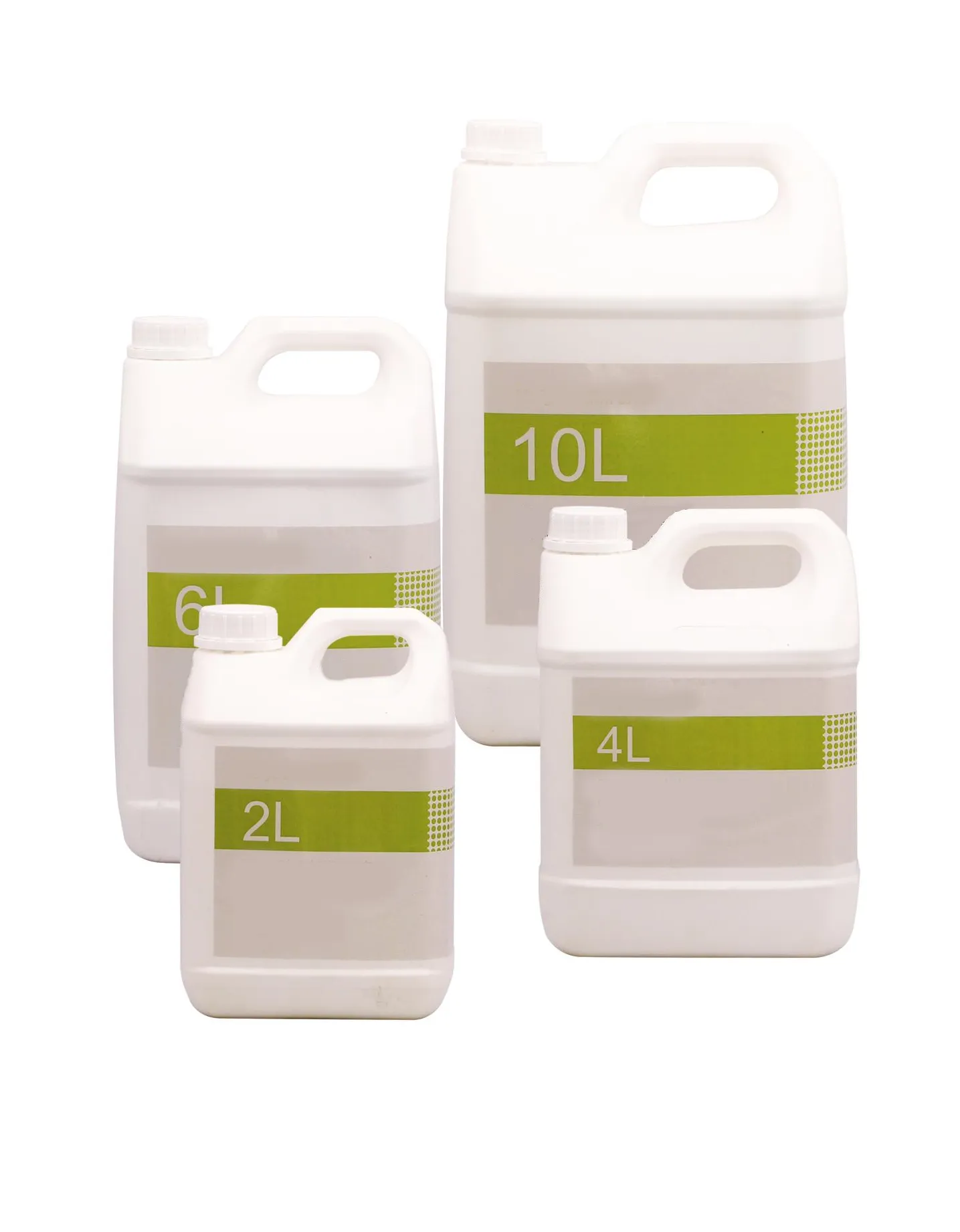 | Environmentally friendly metallographic cutting coolantMetallographic cutting coolant is a high-performance solution designed specifically for cutting metallographic samples with grinding wheels. It is safe for users, environmentally friendly, and free from mineral oil and sodium nitrite. Suitable for a wide range of metallographic cutting machines, the concentrated formula, when mixed with water, provides effective cooling, lubrication, cleaning, disinfection, and corrosion protection. It is skin-friendly, recyclable, and helps safeguard samples during cutting. This coolant also improves surface finish and extends the lifespan of cutting blades. Instructions for Use - Thoroughly clean and remove any existing liquid from the cutting machine.
- The recommended mixing ratio is 1 part coolant to 20 parts water.
- Based on the capacity of the cooling water tank, add the appropriate amount of water first, then add 5% of the coolant.
- As the liquid level decreases, replenish the tank with coolant and water following the same ratio.
|
Buying Guide
| Product Name | Model | Order number | Capacity | Mixing Ratio | Application |
|---|
| Eco-friendly Coolant | SW | CH0214 | 1L | Concentrate : Water = 1:20 | This water-based concentrate, when mixed with water, forms a transparent solution. It is suitable for a wide range of metallographic cutting machines, particularly those equipped with built-in cooling circulation systems. For optimal performance, it is recommended to replace the solution regularly, ideally once per month. |
| CH0400 | 2L |
| CH0399 | 4L |
| CH0398 | 6L |
| CH0397 | 10L |
Metallographic Mounting Consumables
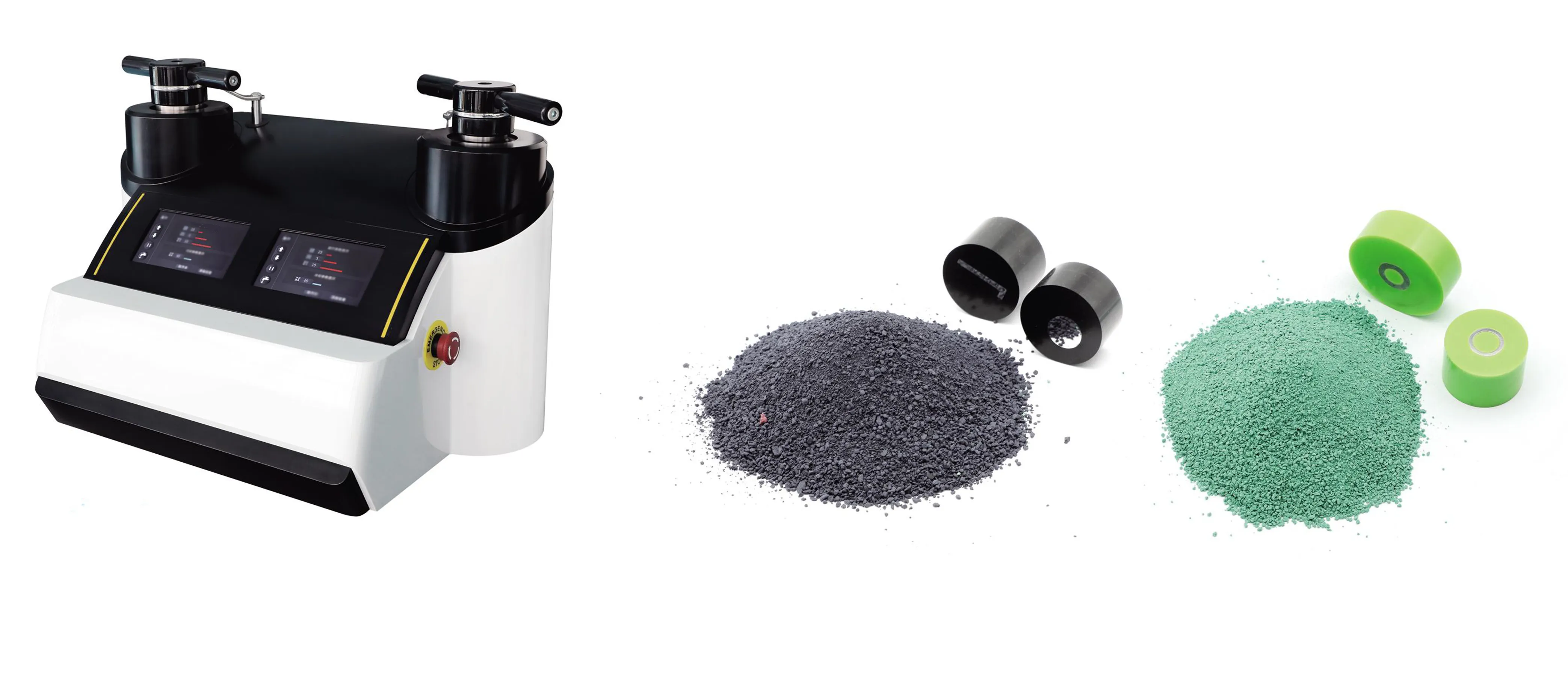
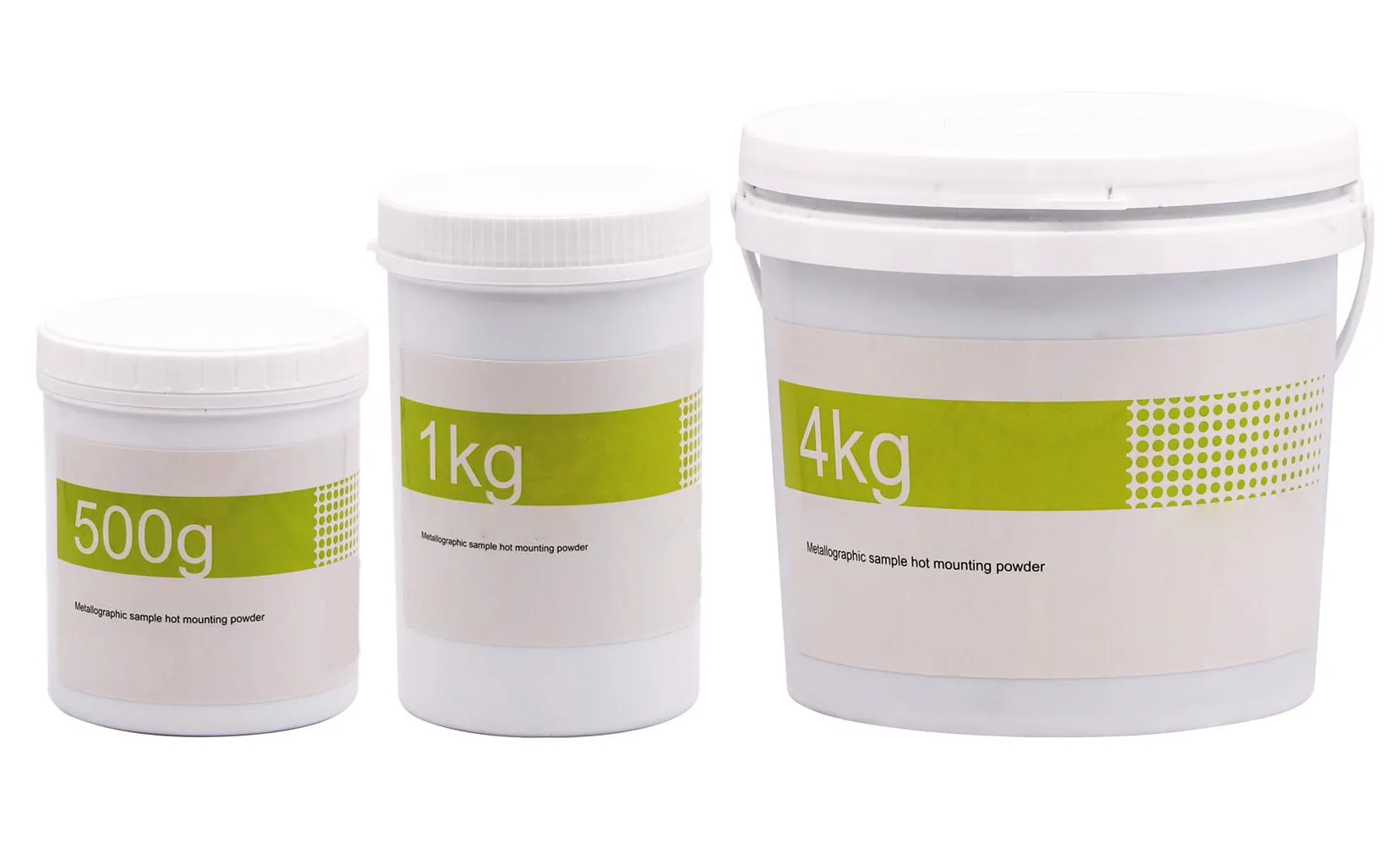 | Hot inlaid powderThe hot inlay powder is formulated with fine resin as the base material, combined with selected minerals or glass fibers as fillers. It is produced through controlled heating, blending, and cooling granulation. The resin softens easily under heat and pressure, and its excellent flow properties allow it to quickly encapsulate samples, speeding up the embedding process. This hot inlay resin is safe and reliable, free of harmful substances, and poses no risk during use, handling, or storage. It also provides dependable performance, withstanding standard laboratory etchants and cleaning agents. |
 |
Purchasing Guide
| Model | Color | Heating temperature | Time | Package | Applications |
|---|
PJM-W
Standard version | White | 120±5℃ | ≥8min | 500g/Bucket | Fast grinding speed for general sample preparation. |
| 1kg/Bucket |
| 4kg/Bucket |
PJM-R
Standard version | Red | 140±5℃ | 500g/Bucket |
| 1kg/Bucket |
| 4kg/Bucket |
PJM-G
Standard version | Green | 500g/Bucket |
| 1kg/Bucket |
| 4kg/Bucket |
PJM-B
Standard version | Black | 500g/Bucket |
| 1kg/Bucket |
| 4kg/Bucket |
BJM-B
Edge Preservation | Black | 500g/Bucket | Provides edge protection, low shrinkage, strong integration with embedded specimens, high hardness, excellent wear resistance, and a slow grinding rate. |
| 1kg/Bucket |
| 4kg/Bucket |
DJM-B
Conductive | Black | 500g/Bucket | Phenolic resin polymer designed for conductive applications, such as electrolytic polishing in electron microscopy, with a medium grinding rate. |
| 1kg/Bucket |
| 4kg/Bucket |
TJB-T
Transparent | Transparent | 150±5℃ | ≥6min | 500g/Bucket | Transparent, soluble type with excellent flow characteristics, suitable for samples requiring specific control of dimensions, positioning, and depth, with a medium grinding rate. |
| 1kg/Bucket |
| 4kg/Bucket |
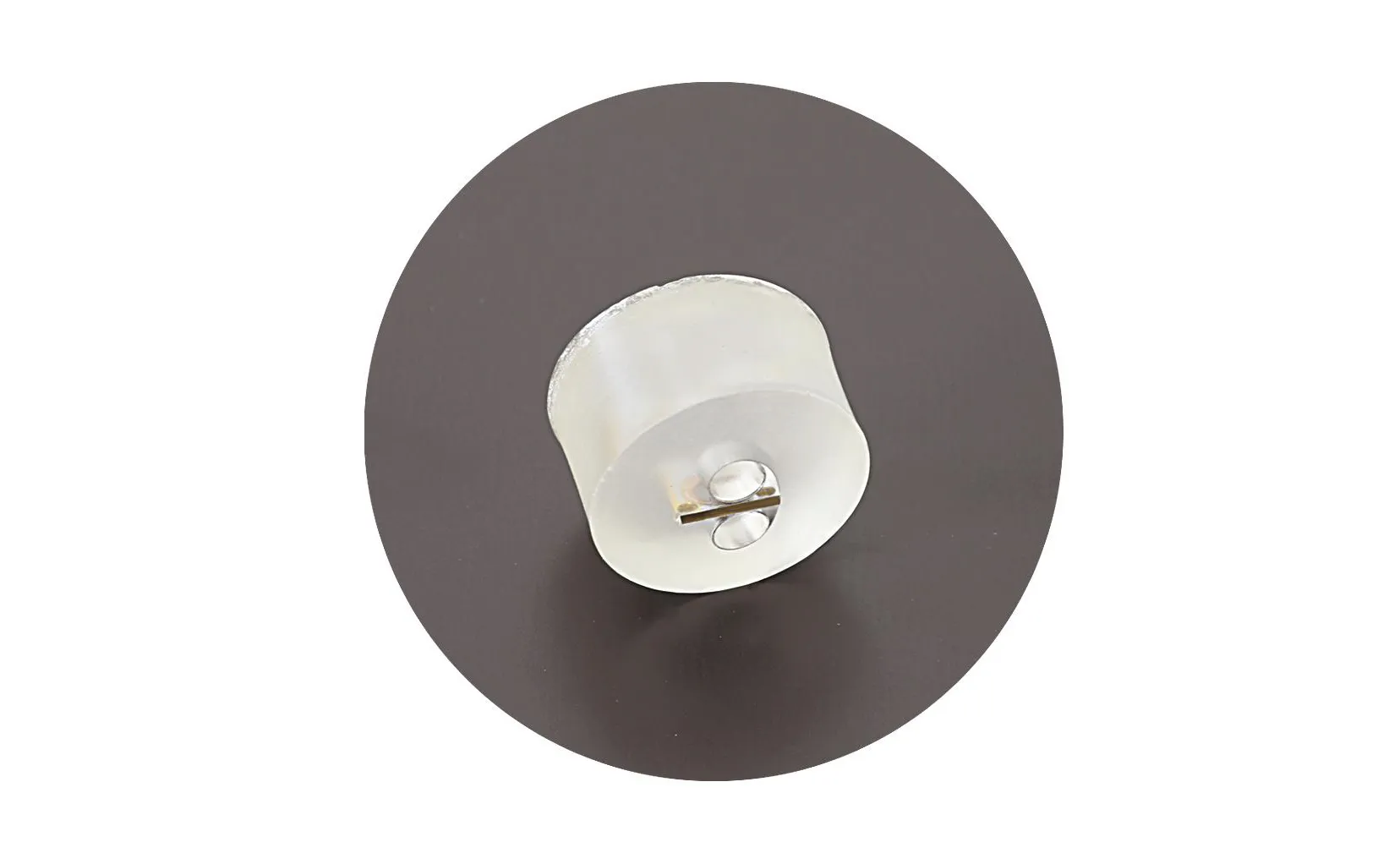 | Cold mounting agent and epoxy mounting agentThe hot inlay powder is formulated with fine resin as the base material, combined with selected minerals or glass fibers as fillers. It is produced through controlled heating, blending, and cooling granulation. The resin softens easily under heat and pressure, and its excellent flow properties allow it to quickly encapsulate samples, speeding up the embedding process. This hot inlay resin is safe and reliable, free of harmful substances, and poses no risk during use, handling, or storage. It also provides dependable performance, withstanding standard laboratory etchants and cleaning agents. |
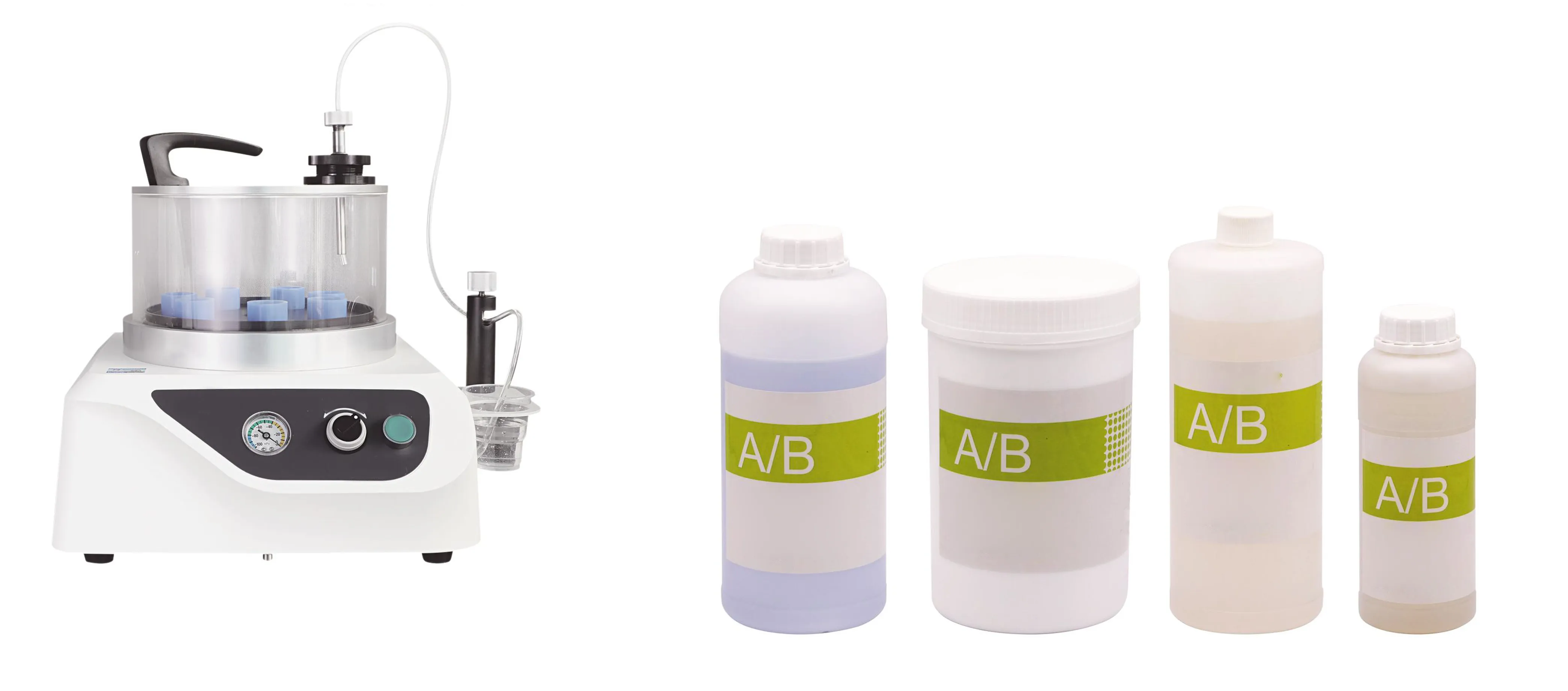 |
Purchasing Guide
| Product name | Model | Package | Applications |
|---|
| Cold inlaid king | LYK | 1000g of cold embedding powder,
800ml of curing agent,
1 cold embedding mold with a diameter of 30mm,
20 plastic cups,
40 stirring rods,
and 1 spoon. | The product delivers fast embedding, excellent transparency, low viscosity, and high strength. It is designed for the metal processing industry where heating, pressure, or embedding machines are not required. Curing time is 25 minutes at 25 °C, with a mix ratio of 5 parts cold embedding powder to 4 parts curing agent. |
| Epoxy king | HSK | 1000ml of resin liquid,
500ml of curing agent,
1 cold embedding mold with a diameter of 30mm,
20 plastic cups,
and 40 stirring rods. | The product cures quickly and provides full transparency. It is designed for embedding samples in electronic applications such as PCB and SMT, where heating or embedding machines are not available. Curing time is 1 hour at 25 °C, with a mix ratio of 2 parts resin liquid to 1 part curing agent. |
| HSN | 1000ml of resin liquid,
500ml of curing agent,
1 cold embedding mold with a diameter of φ30,
20 plastic cups,
and 40 stirring rods. | The product has low viscosity, allowing easy penetration into materials, and provides full transparency. It is designed for embedding samples in electronic applications such as PCB and SMT, where heating or embedding machines are not required. Curing time is 3–4 hours at 25 °C, with a mix ratio of 2 parts resin liquid to 1 part curing agent. |
| HSM | 1000ml of resin liquid,
300ml of curing agent,
1 cold embedding mold with a diameter of φ30,
20 plastic cups,
and 40 stirring rods. | The product generates low heat, offers minimal shrinkage, and provides full transparency. It is designed for embedding samples in electronic applications such as PCB and SMT, where heating or embedding machines are not required. Curing time is 20–24 hours at 25 °C, with a mix ratio of 3 parts resin liquid to 1 part curing agent. |
Buying Guide
| Product name | Model | Package | Applications |
|---|
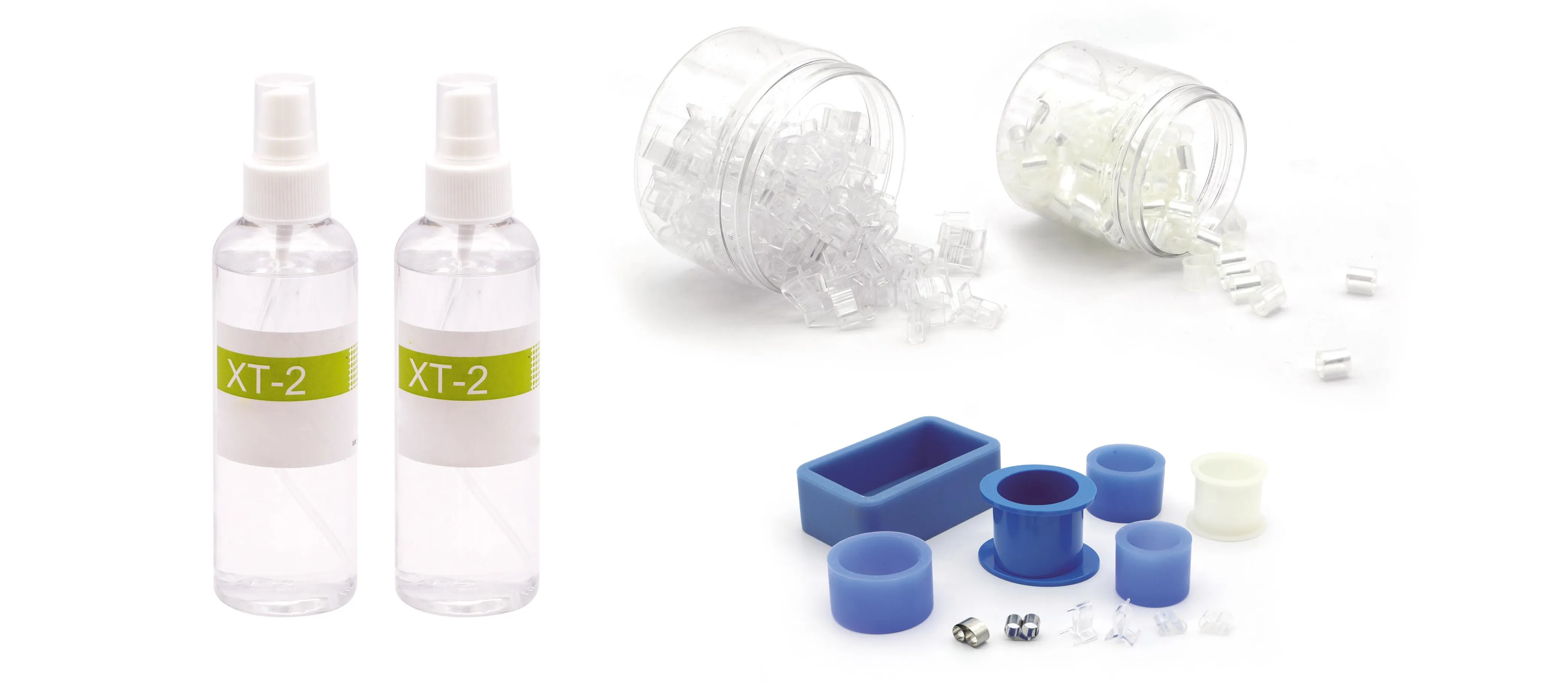
| Embedding release agent | XT-2 | 200ml/Bottle | Demolding suitable for hot embedding and cold embedding molds. |
| Cold embedding circular flexible mold | φ20X18 φ25X18 φ30X18 φ40X23 φ50X23 | 10/Bag | Cylindrical silicone rubber molds with smooth and easily demoldable inner walls, durable and reusable, suitable for embedding metallographic sectioning samples. |
Cold embedding circular
rigid mold | φ25X23 φ30X27 φ32X27 φ40X29 | 10/Bag | Cylindrical ABS hard molds with smooth and easily
demoldable inner walls, durable and reusable, suitable
for embedding metallographic sectioning samples. |
| Cold embedding square flexible mold | 55X20X22 70X40X22 | 10/Bag | Square silicone rubber molds with smooth and easily demoldable inner walls, durable and reusable, suitable for embedding metallographic sectioning samples. |
| Stainless steel clip | Stainless steel | 100/Package | Used in conjunction with reusable molds or a hot embedding machine. |
| Roll-type clamp | PET | 100/Package | Used in conjunction with reusable molds. |
| Triangle clip | PA | 100/Package | Used in conjunction with reusable molds. |
| Circular clamp | PS | 100/Package | Disposable embedding material filling mold. |
Metallographic Polishing Consumables
High-efficiency Diamond Spray Polishing Agent.
This high-efficiency diamond spray polishing agent is formulated with premium diamond micro-powder and a polishing solution, sealed in a pressurized metal canister. Before use, the canister is lightly shaken and inverted to evenly spray the abrasive onto the polishing disc in a fine mist.
The spray offers multiple options for polishing powders and particle sizes. Its convenient, non-glossy, and easy-cutting properties help achieve fast grinding results. By selecting different particle sizes, both metallographic and petrographic samples can be polished to varying levels. The finished samples reveal their distinct features and display their metallographic structure with greater accuracy.
Buying Guide
| Product name | Abrasive | Particle size | Package | Applicable |
|---|
| High-efficiency Diamond Polishing Spray | Single Crystal Diamond | 0.25μm | 350ml/Canister | Rapid grinding and polishing for all types of material samples and components, including instrument parts. |
| 0.5μm |
| 1μm |
| 1.5μm |
| 2.5μm |
| 3.5μm |
| 5μm |
| 7μm |
| 10μm |
| 14μm |
| 20μm |
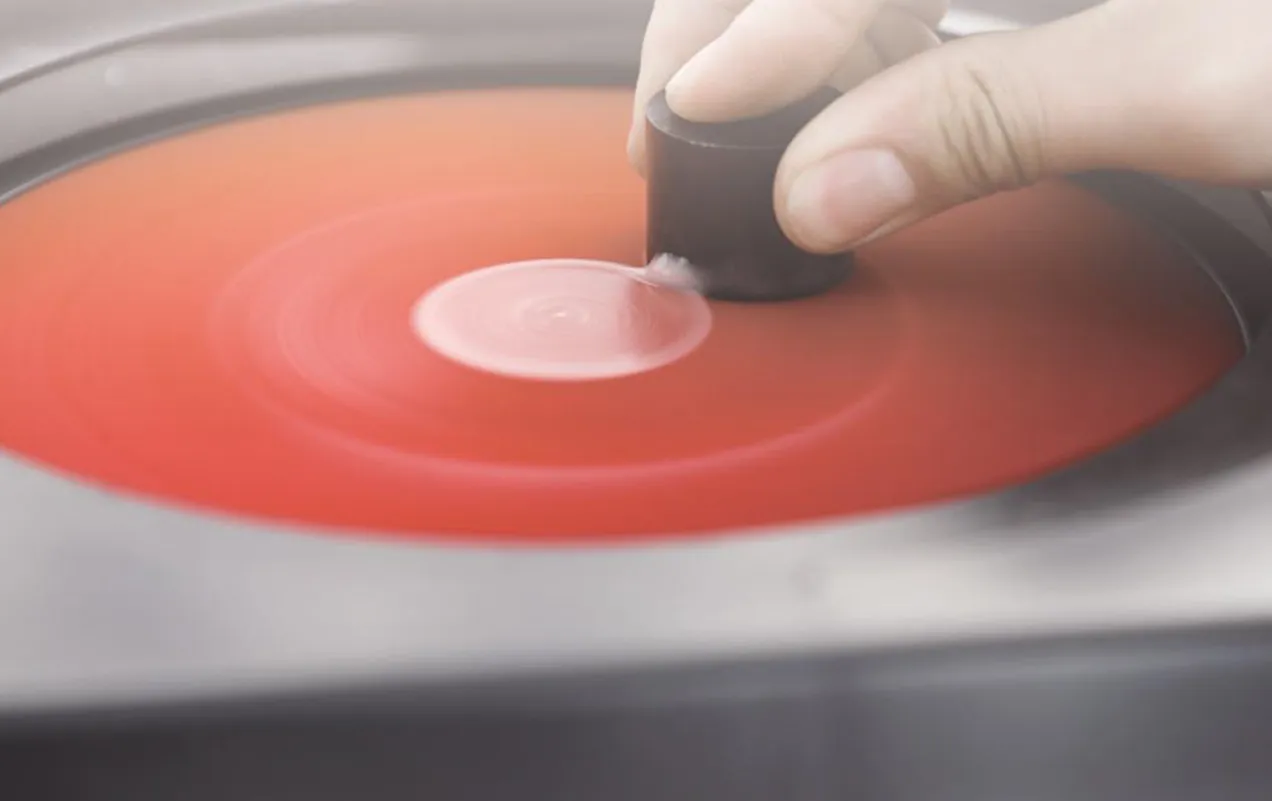
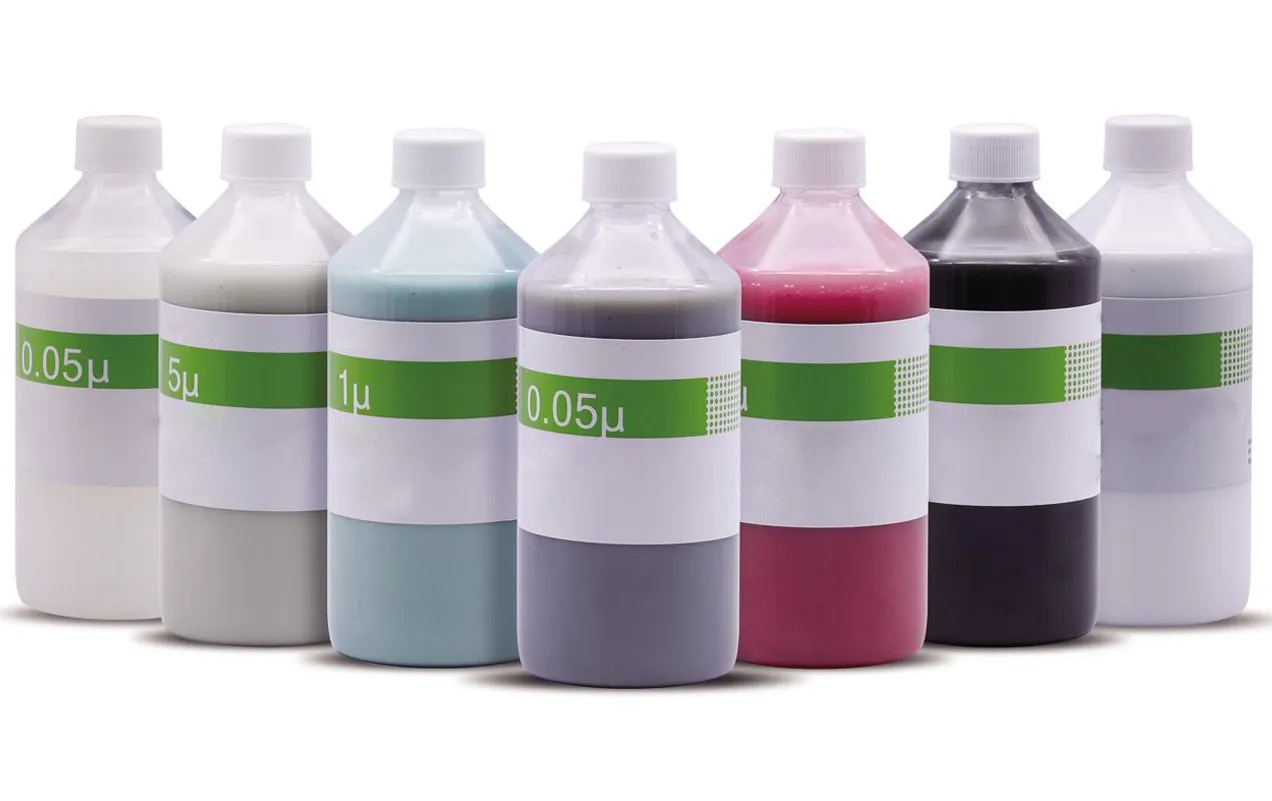 | Diamond Suspension for Lapping and PolishingOur latest diamond suspension is designed with safety and environmental responsibility in mind. It is formulated by homogenizing high-performance diamond particles with cooling and lubricating components in a temperature-controlled laboratory. This advanced process makes it compatible with a wide range of polishing carriers, meeting the preparation needs of various samples. The suspension is well-suited not only for metallographic and petrographic grinding and polishing but also for achieving high surface smoothness in ferrous and non-ferrous metals, ceramics, composites, gemstones, instruments, and optical glass. Product Advantages - Higher Particle Concentration
Selected high-quality diamond abrasives undergo strict purification and grading to ensure consistent particle concentration. - Enhanced Suspension Stability
Available in both water-based and oil-based formulations, the suspension keeps diamond abrasives evenly dispersed, delivering reliable performance. - High Grinding and Removal Rates
The high-hardness abrasives provide excellent grinding and polishing efficiency, helping save material and reduce processing time. - Free of Volatile Organic Compounds (VOCs)
The formulation contains no volatile organic compounds, supporting both user safety and environmental protection.
|
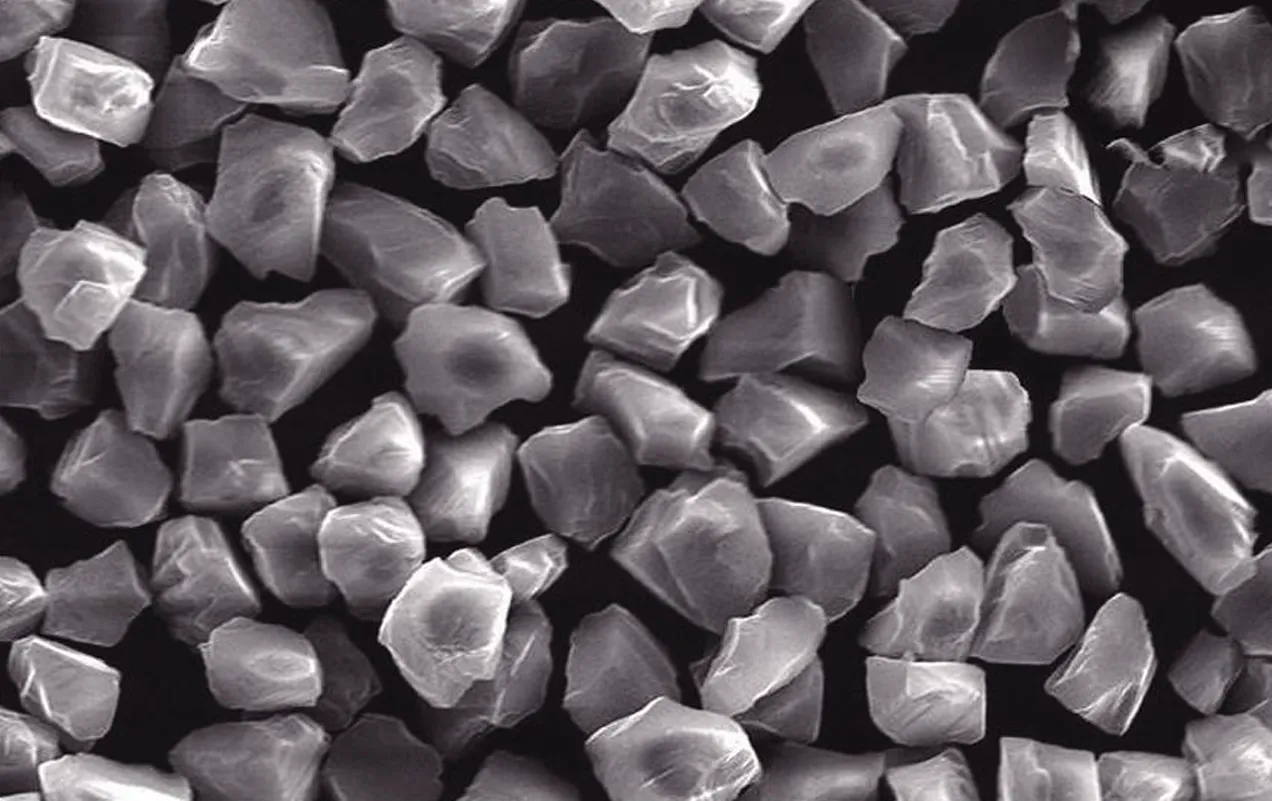 | Single crystal synthetic diamondsSingle crystal diamonds are crystalline structures formed through covalent bonding with saturated, highly directional bonds. They possess exceptional hardness and wear resistance, making them a highly cost-effective option for processing a wide range of materials. These diamonds deliver fast material removal rates while achieving superior surface finishes. |
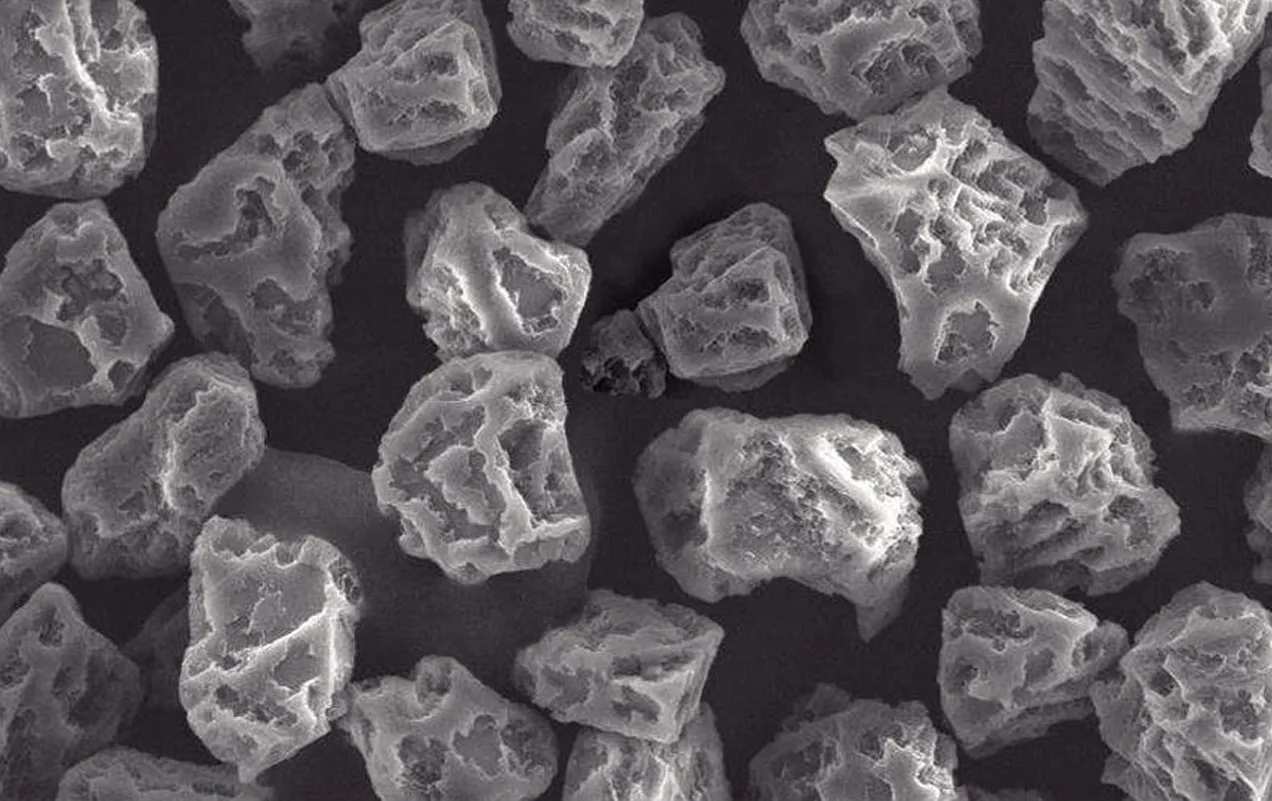 | Polycrystalline synthetic diamonds Polycrystalline synthetic diamonds have a structure similar to natural diamonds, formed by the aggregation of spherical microcrystals. They are highly effective for processing a wide range of materials and are especially well-suited for superhard ceramics and sintered carbides. Unlike single crystal diamonds, polycrystalline diamonds feature more crystal edges and grinding surfaces, with each edge capable of cutting. This increases the likelihood of diamond-to-sample contact, greatly improving grinding efficiency. They also demonstrate outstanding toughness and self-sharpening characteristics. During grinding, larger particles break down into smaller ones, preventing the formation of sharp edges that could cause scratches on the workpiece surface. As a result, polycrystalline diamonds are less likely to produce surface scratches compared to single crystal diamonds, making them ideal for applications requiring both precision and surface protection. |
 |
Diamond Suspension Polishing Fluid
Buying Guide
| Abrasive materials | Particle size | Capacity | Applications |
|---|
| Diamond suspension for grinding and polishing (EG) | 28μm, 20μm, 14μm, 10μm, 9μm, 7μm, 6μm, 5μm, 3.5μm, 2.5μm, 1.5μm, 1.0μm, 0.5μm, 0.25μm, 0.05μm | 500ml/Bottle | Monocrystalline, water-based, ethylene glycol-based polishing lubricant formula. Used for metallographic preparation of most metal materials and soft materials. |
| Diamond suspension for grinding and polishing (PG) | 9μm, 6μm, 3μm, 1μm, 0.5μm, 0.25μm | 500ml/Bottle | Monocrystalline, water-based, propylene glycol-based polishing lubricant formula. Used for grinding and polishing of soft and tough materials. |
| Diamond suspension for grinding and polishing (OS) | 9μm, 6μm, 3μm, 1μm, 0.5μm, 0.25μm | 500ml/Bottle | Monocrystalline, oil-based, solvent oil-based polishing lubricant formula. Used for grinding and polishing of soft materials and materials that cannot be exposed to water. |
| Diamond suspension for grinding and polishing (WS) | 9μm, 6μm, 3μm, 1μm, 0.5μm, 0.25μm | 500ml/Bottle | Polycrystalline, water-based, ethylene glycol-based polishing lubricant formula. Used for grinding and polishing of various materials/composite materials with different hardness. |
| Diamond suspension for grinding and polishing (DS) | 9μm, 6μm, 3μm, 1μm, 0.5μm, 0.25μm | 500ml/Bottle | Polycrystalline, alcohol-based, ethanol-based polishing lubricant formula. Used for grinding and polishing of materials that cannot be exposed to water. |
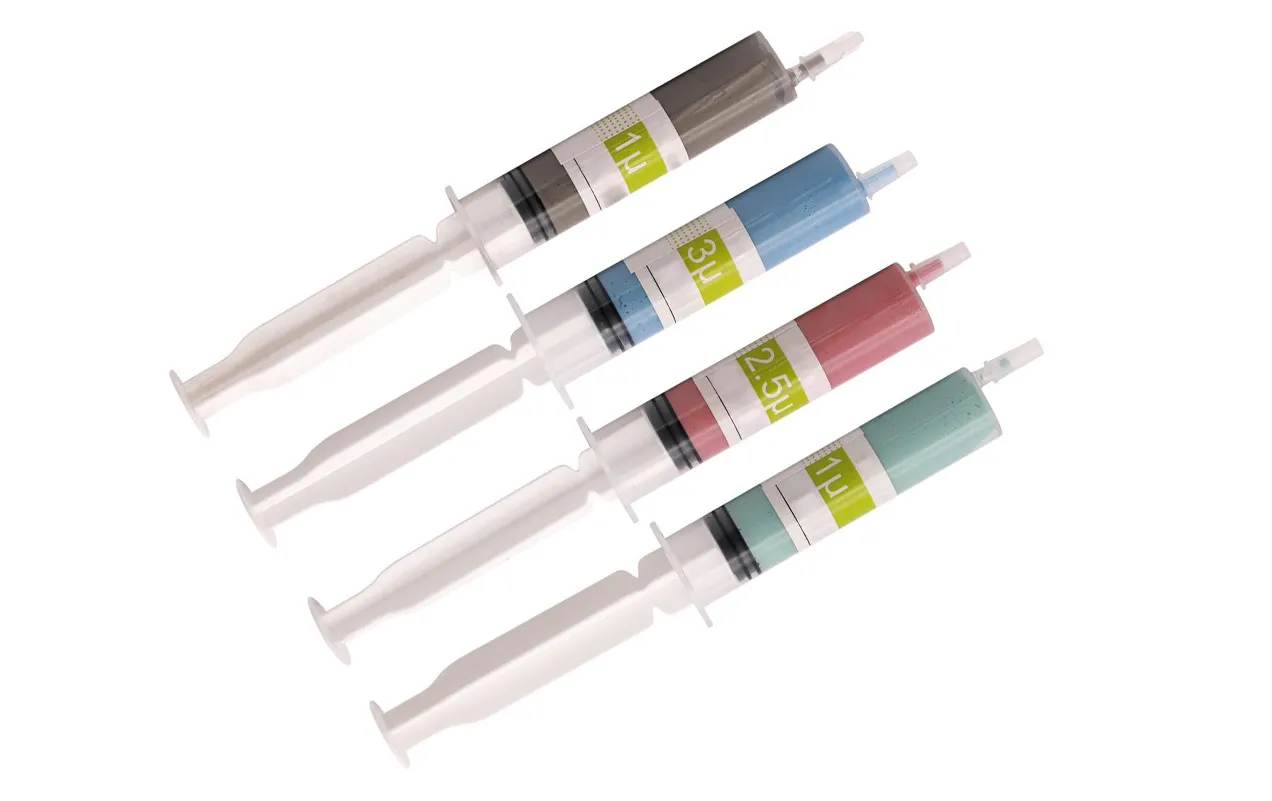 | Diamond Grinding PasteOur diamond grinding paste is formulated with premium diamond micro-powder using advanced preparation technology to ensure even distribution in a paste-like carrier. It features self-lubrication, a water-based formula, low viscosity, and excellent grinding and polishing performance, delivering both efficiency and ease of use. The paste is ideal for achieving high surface smoothness in ferrous and non-ferrous metals, ceramics, composites, gemstones, instruments, and optical glass. Different colors represent different grit sizes, and the water-soluble formula allows for easy dilution if needed. Packaging Options: 5 g / 20 g (custom sizes available upon request).
Grit Sizes: - Fine polishing: W0.25 to W1.5
- Semi-fine polishing: W2.5 to W3.5
- Coarse grinding: W5 to W40
|
Buying Guide
| Abrasive materials | Model | Particle size | Capacity | Applicable |
|---|
| Single crystal diamond | SCMW | 40μm, 28μm, 20μm, 14μm, 10μm, 7μm, 5μm, 3.5μm, 2.5μm, 1.5μm, 1μm, 0.5μm, 0.25μm | 5g per unit 20g per unit | Water-based ointment suitable for grinding, regular polishing, fine polishing, and mirror polishing of all materials. |
| Polycrystalline diamond | SCMW | 9μm, 6μm, 3μm, 1μm, 0.5μm, 0.25μm | Water-based ointment suitable for grinding, regular polishing, fine polishing, and mirror polishing of various hard materials, titanium alloy samples, including flat surfaces, curved surfaces, polyhedra, and irregular shapes. |
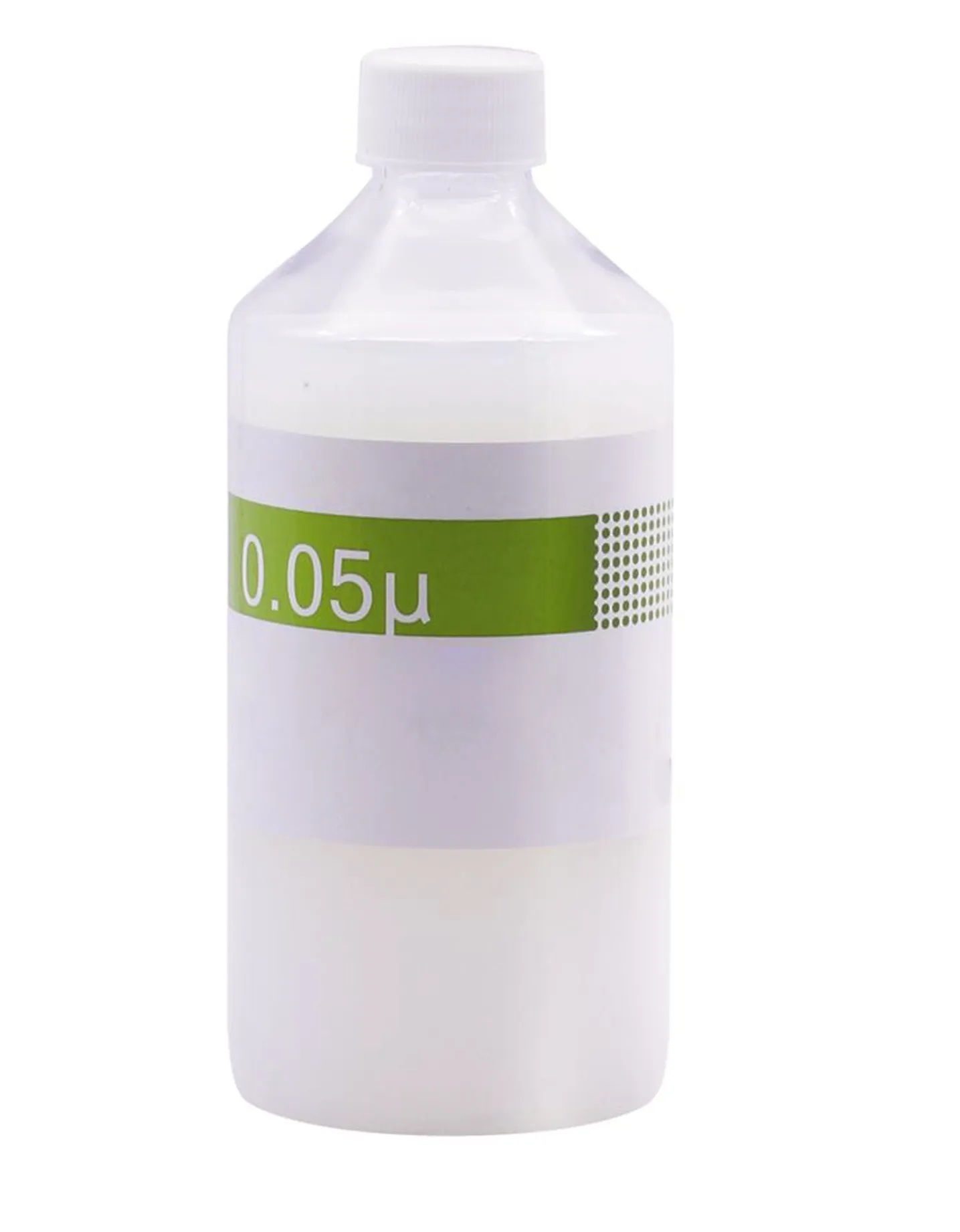 | Aluminum Oxide Suspension for Grinding and PolishingThis aluminum oxide suspension is produced by dispersing high-purity aluminum oxide micron powder in a lubricating matrix using advanced agglomeration treatment. The result is a uniformly dispersed suspension with high hardness, strong cutting ability, and broad applicability. The innovative bonding matrix prevents drying or buildup on polishing fabrics and is easy to clean after use. Environmentally friendly and non-irritating to the skin, it is well-suited for the final polishing of precision products and metallographic sample analysis. Applications
Beyond metallographic and petrographic samples, the suspension is also effective for the final polishing of: - Minerals and metal matrix composites
- Crystals and gemstones
- High-grade stone materials
- Ceramic components
- Optical crystals and lenses
- Phone screens and LED sapphire substrates
- Plastic housings and more
|
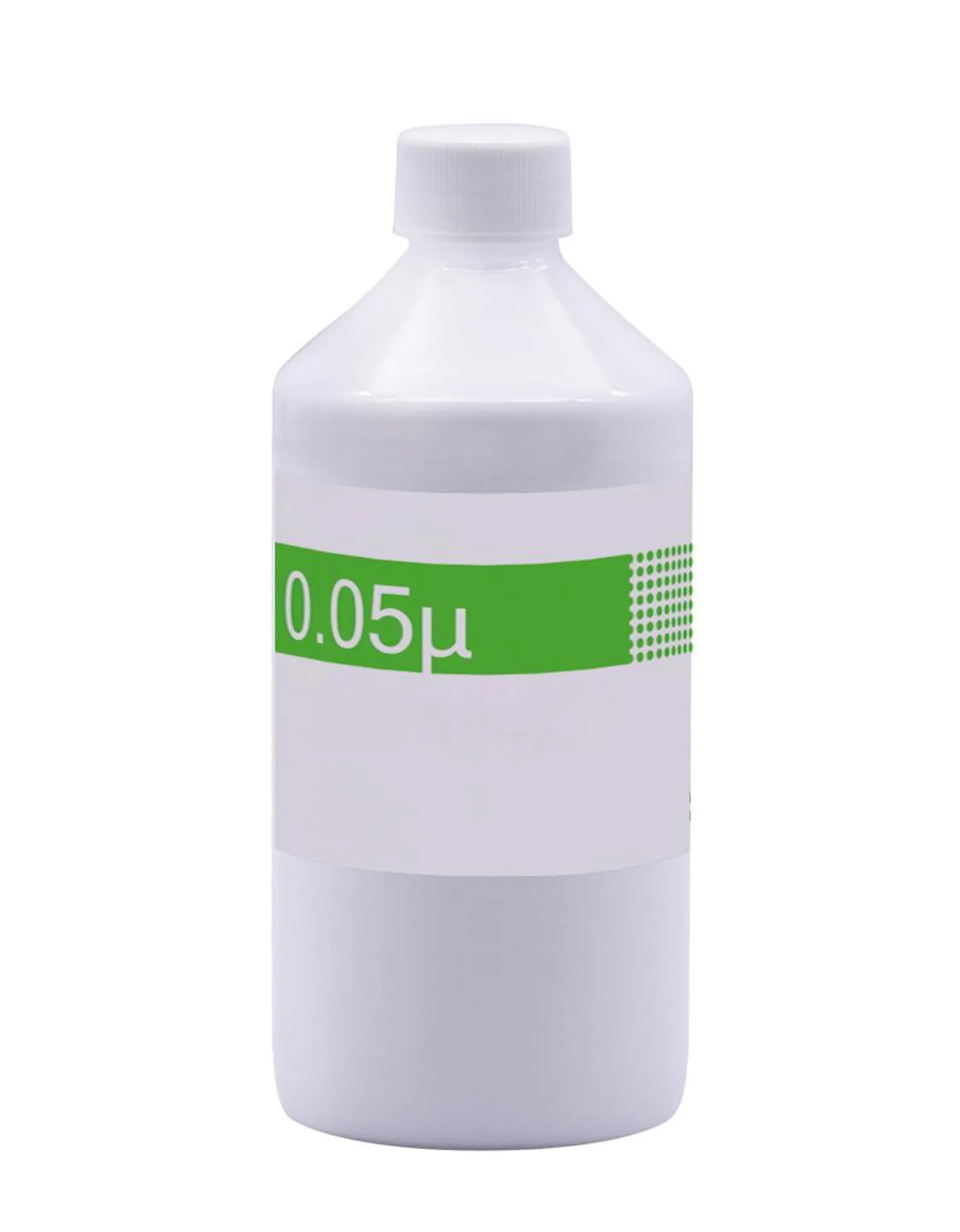 | Silicon Dioxide Suspension for Grinding and PolishingThis suspension combines high-purity nanoscale silicon powder with an alkaline lubricating matrix, preventing agglomeration and ensuring uniform dispersion. It supports both mechanical and chemical polishing, making it ideal for achieving high-precision results in the final finishing of demanding products. Applications
Well-suited for the final polishing of: - Metallographic and petrographic samples
- Ferrous, non-ferrous, and precious metals
- Ceramics and composite materials
- Instruments and gemstones
- Quartz, optical crystals, and optical lenses
- Phone screens and LED sapphire substrates
- Plastic housings and more
|
Purchasing Guide
| Name | Abrasive particles | Particle size | Capacity | Application scope |
|---|
| Alumina Suspension Grinding and Polishing Fluid | Alumina | 10μm, 7μm, 5μm, 3.5μm, 2.5μm, 1.5μm, 1μm, 0.5μm, 0.3μm, 0.05μm | 500ml | This fluid is formulated with high-purity alumina powder. The abrasive particles are evenly dispersed, ensuring stable suspension without agglomeration. With a neutral pH, it is suitable for polishing a wide range of precision products and for metallographic section analysis. Usage: Ready to use; no additional preparation required. |
| Silica Suspension Grinding and Polishing Fluid | Silica | 0.05μm | This liquid silicon dioxide suspension (pH 9.5) is designed for the final polishing of high-purity metals, alloys, minerals, ceramics, and polymers. Usage: Ready to use; no additional preparation required. |
| 0.02μm | Liquid silicon dioxide suspension (pH 10), formulated for the final polishing of high-precision products. Usage: Ready to use; no additional preparation required. |
Metallographic Polishing LubricantPolishing is the final step in material preparation. Under pressure in a grinding and polishing machine, heat and friction can occur, often leading to scratches or deformation in the metallographic structure. To minimize these effects, it is recommended to use a smooth, soft polishing cloth along with a polishing lubricant containing nanoscale particles. Our latest series of polishing lubricants provide excellent lubricity, effectively reducing thermal damage and delivering a clean, high-quality surface finish. Their strong dispersing action ensures abrasives remain evenly distributed across the polishing cloth, accelerating the grinding and polishing process. - Blue Formula: Ideal for precision grinding and diamond polishing of all materials.
- Red Formula: Specially designed for the final polishing of non-ferrous metals and softer iron-based alloys.
| Instructions for Use- Semi-automatic or fully automatic machines
Pour the liquid into an FY-5 dropper bottle and set the dropper flow rate parameters. The lubricant will automatically drip onto the polishing cloth, providing both lubrication and cooling during polishing. - Manual polishing
Pour the liquid into a soft plastic bottle with a nozzle (such as a wash bottle). Start the grinding and polishing machine, then gently squeeze the bottle to spray the lubricant and cooling liquid onto the cloth. Once the entire polishing surface is evenly wetted, polishing can begin. - Additional lubrication
If resistance increases during grinding or polishing, apply a moderate amount of lubricant and cooling liquid as needed.
|
Alumina Polishing Powder / Alumina Grinding PasteOur aluminum oxide polishing powder is made from professional-grade α-type aluminum oxide. The particles are smooth, scratch-resistant, and feature a narrow particle size distribution. This provides high precision, strong grinding ability, and broad applicability. Polishing with this product results in surfaces with excellent smoothness, free from substances harmful to the human body. It is well-suited for grinding and polishing a wide range of materials. | 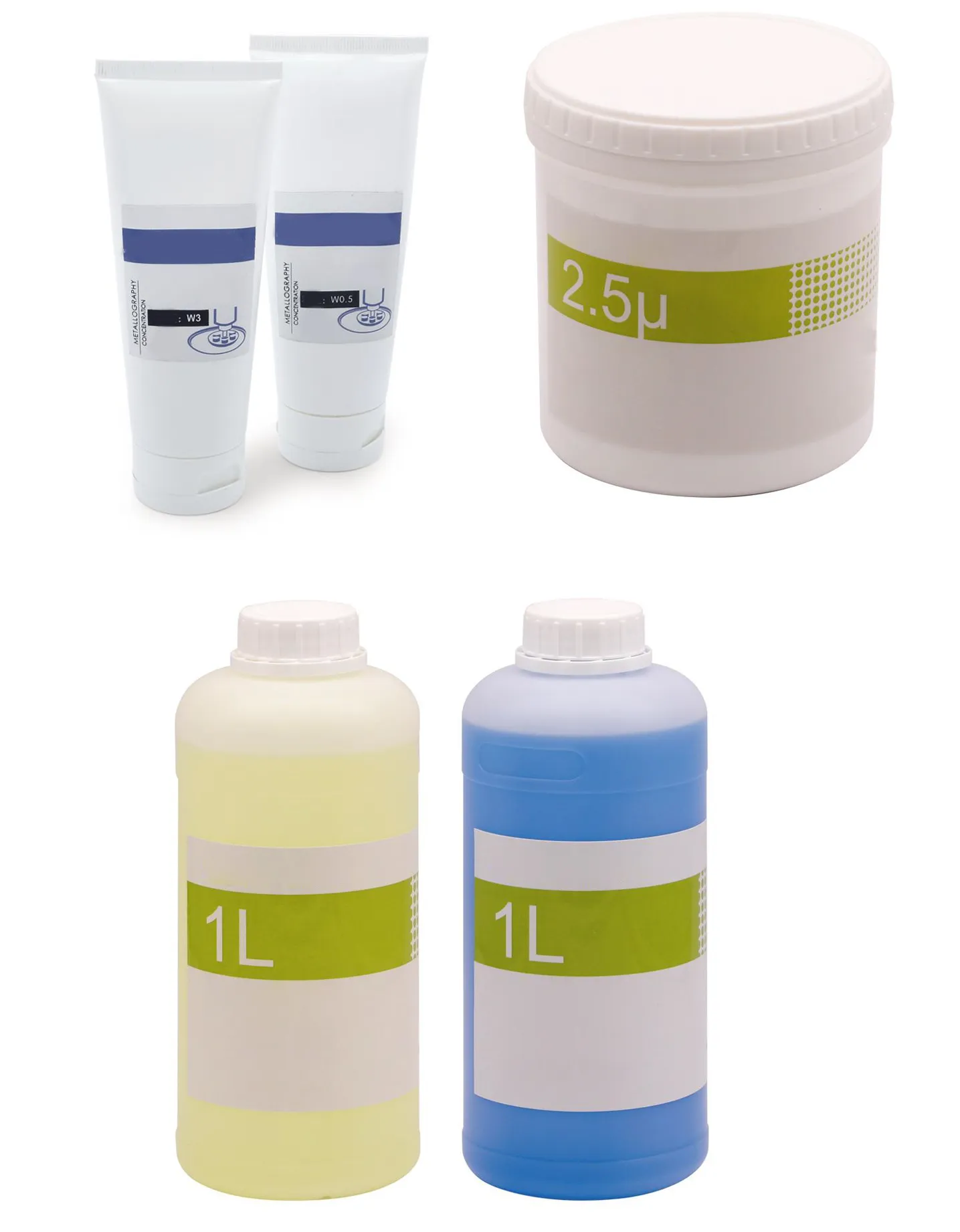 |
Guide to Purchasing Metallographic Polishing Lubricants
| Product name | Model | Color | Order number | Order number | Application |
|---|
| Metallographic polishing lubricant | MP-B | Blue | CH0490 (500ml) | CH0485 (1000ml) | Used for precision grinding and diamond polishing of all |
| MP-R | Red | CH0492 (500ml) | CH0487 (1000ml) | Used for final polishing of non-ferrous metals and softer iron-based metals. |
Guide for Selecting Aluminum Oxide Polishing Powder/Grinding Paste
| Product name | Abrasive | Particle size (μm) | Capacity | Application |
|---|
| Alumina polishing powder | Alumina | 10, 7, 5, 3.5, 2.5, 1.5, 1, 0.5, 0.05 | 500g/Bottle | Polishing of colored metal samples |
| Alumina abrasive paste | Alumina | 10, 7, 5, 3.5, 2.5, 1.5, 1, 0.5, 0.05 | 80g/stick |
Polishing Disc
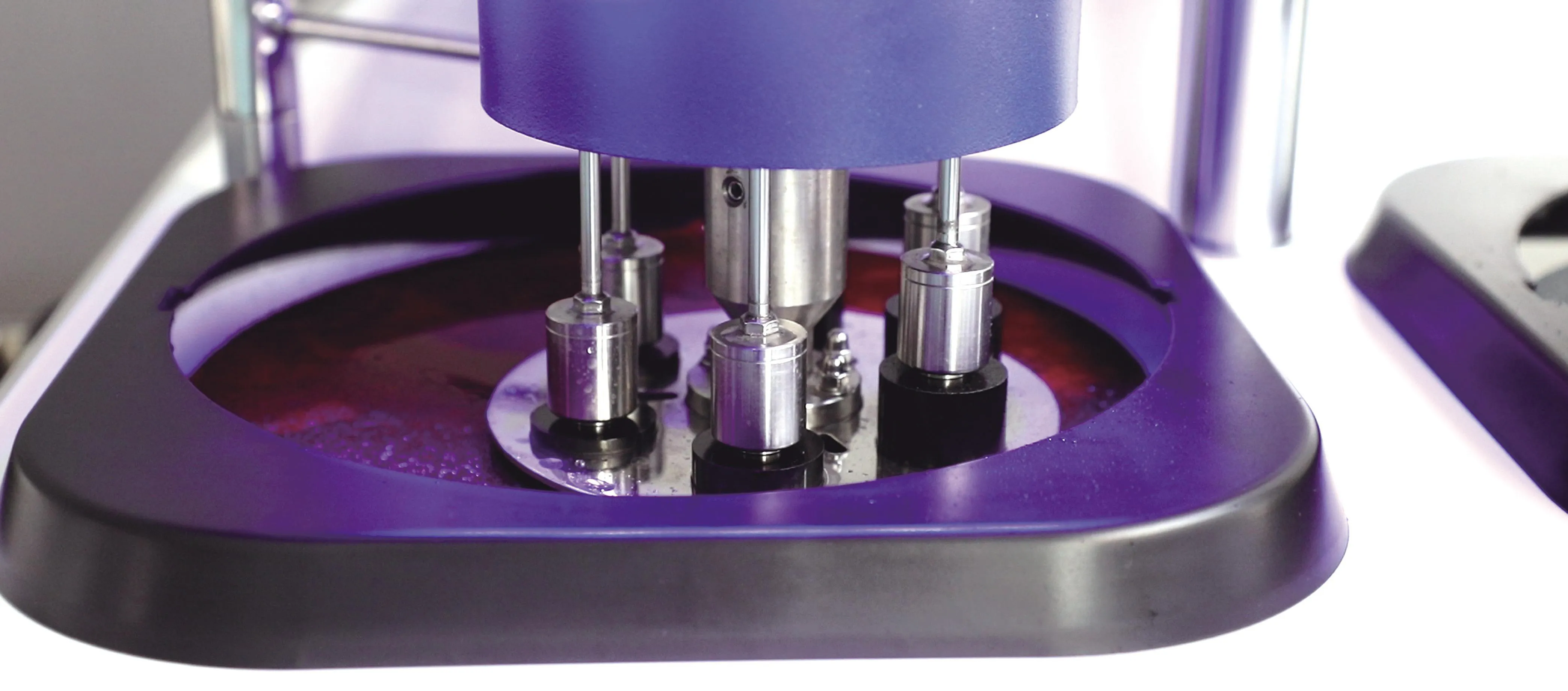
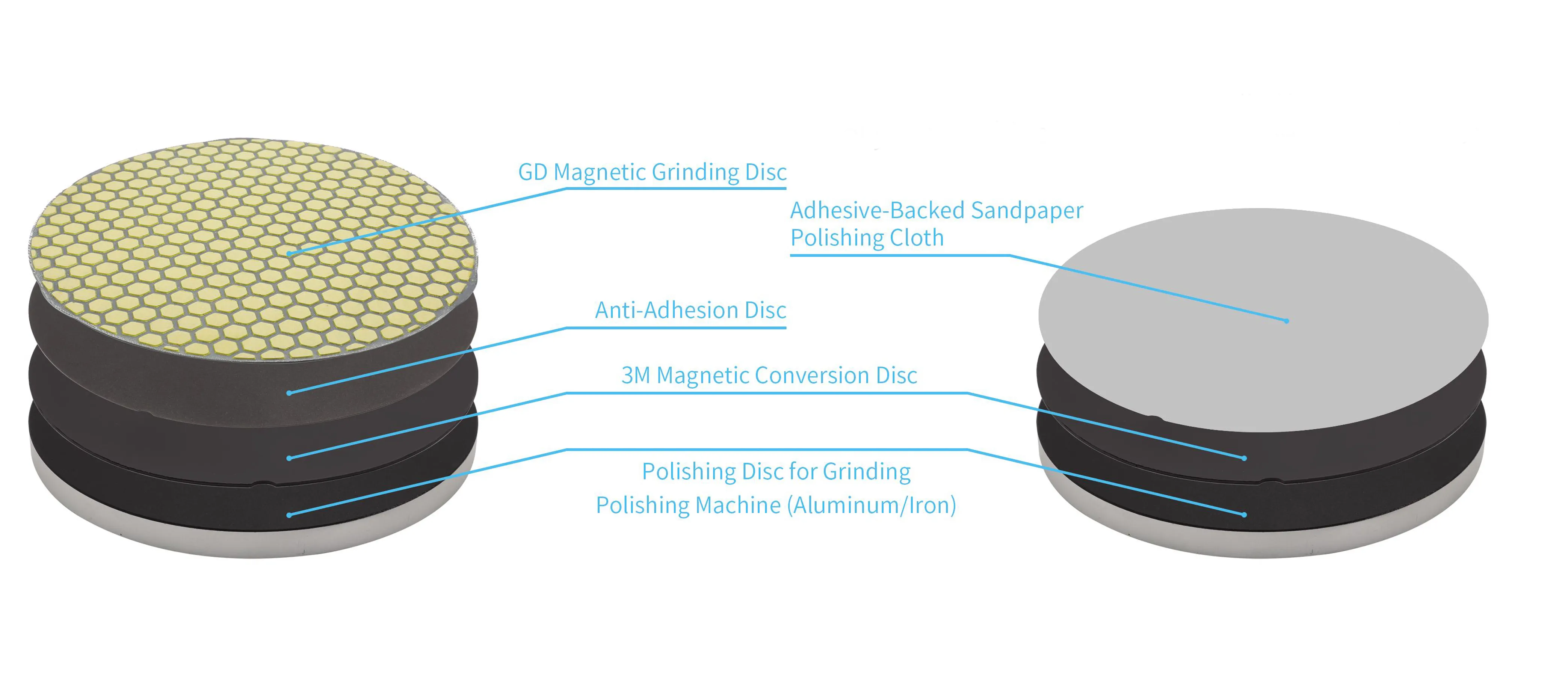
Anti-Adhesion Disc The surface of the non-stick plate is specially treated to reduce adhesive residue when using adhesive-backed polishing cloths or metallographic sandpaper, ensuring greater convenience and efficiency. It is also compatible with magnetic pads, allowing for quick switching between different polishing media. | Magnetic adhesive pad The magnetic backing pad enables fast and easy switching between polishing cloths or metallographic sandpapers. When working with different metal samples, variations in polishing powders, precision requirements, and material hardness can make changing and securing polishing cloths both inconvenient and wasteful. By using a magnetic backing pad to hold polishing discs, the process is greatly simplified. Preparing multiple non-stick pads with different polishing cloths or sandpapers attached allows for quick, efficient replacements, saving both time and materials. |
Diamond Abrasive Disc The diamond abrasive disc delivers strong cutting power and high efficiency, achieving excellent polishing results. Its durability and long lifespan make it a complete replacement for traditional sandpaper. The raised resin surface design improves debris removal, preventing contamination and producing a smoother sample finish. The resin layer is densely embedded with diamond micropowder, providing sharper cutting edges for efficient removal of surface deformation from earlier stages. The disc's grinding ability is regenerative—when used with a diamond suspension polish, it restores its original cutting power. | 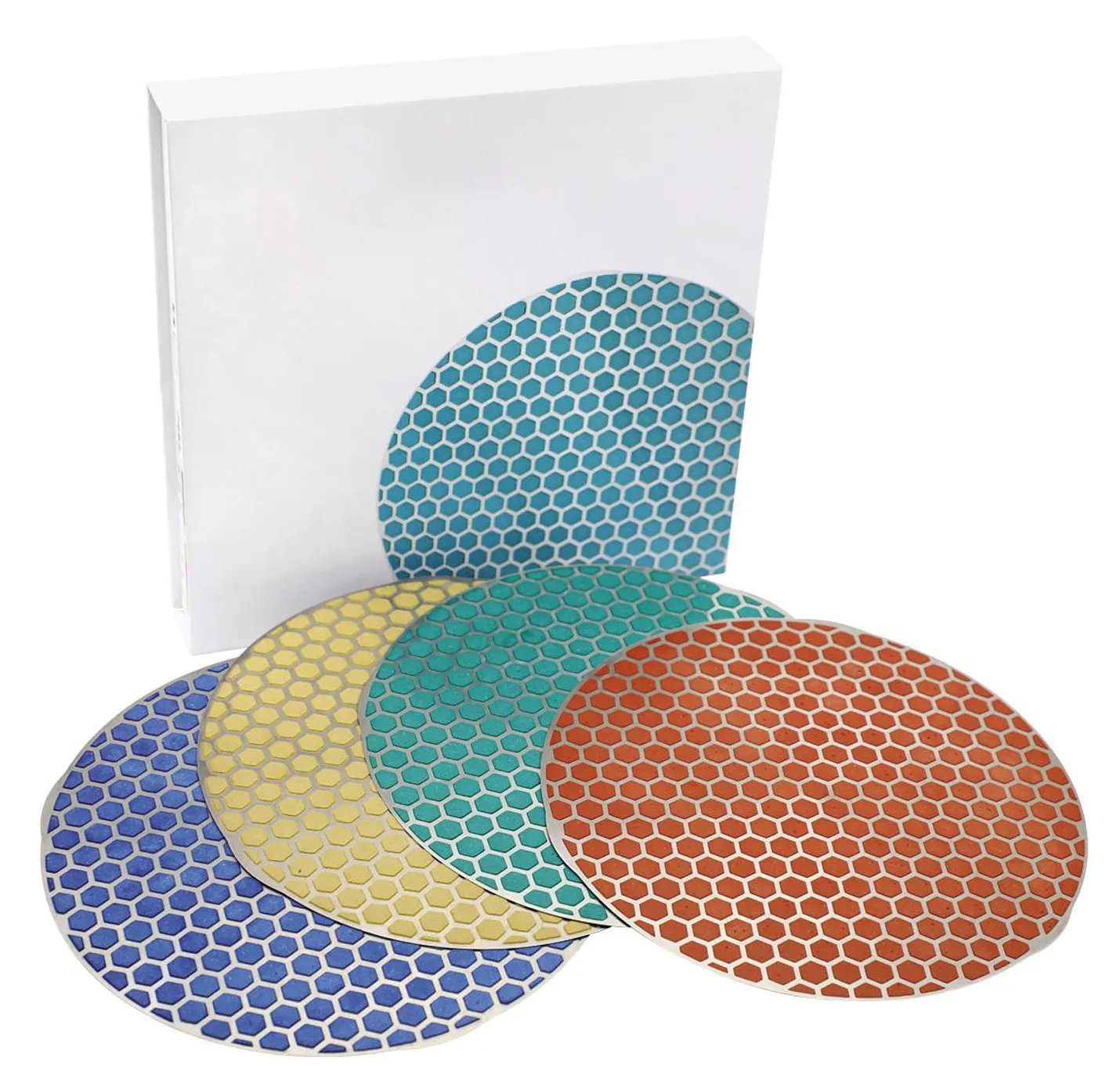 |
Buying Guide
| Name | Grit Size | Specifications | Scope of Application |
|---|
| Anti-Adhesion Disc | | Φ203mm, Φ250mm, Φ300mm | Easily Bonds Various Adhesive-Backed Materials |
| Magnetic adhesive pad | | Φ203mm, Φ250mm, Φ300mm | Suitable for Quick-Charge Grinding and Polishing Systems |
| Diamond Sintered Grinding Disc | 80#, 120#, 220#, 500#, 800#, 1200#, 2000#, 4000# | Φ200mm, Φ250mm, Φ300mm | Ideal for Precision Grinding of Crystals, Ceramics, and Hard Alloys |
Magnetic Conversion Device
Easily Upgrade Equipment and Consumables: With just one grinding or polishing disc, this device seamlessly converts your machine into a magnetic-compatible system.
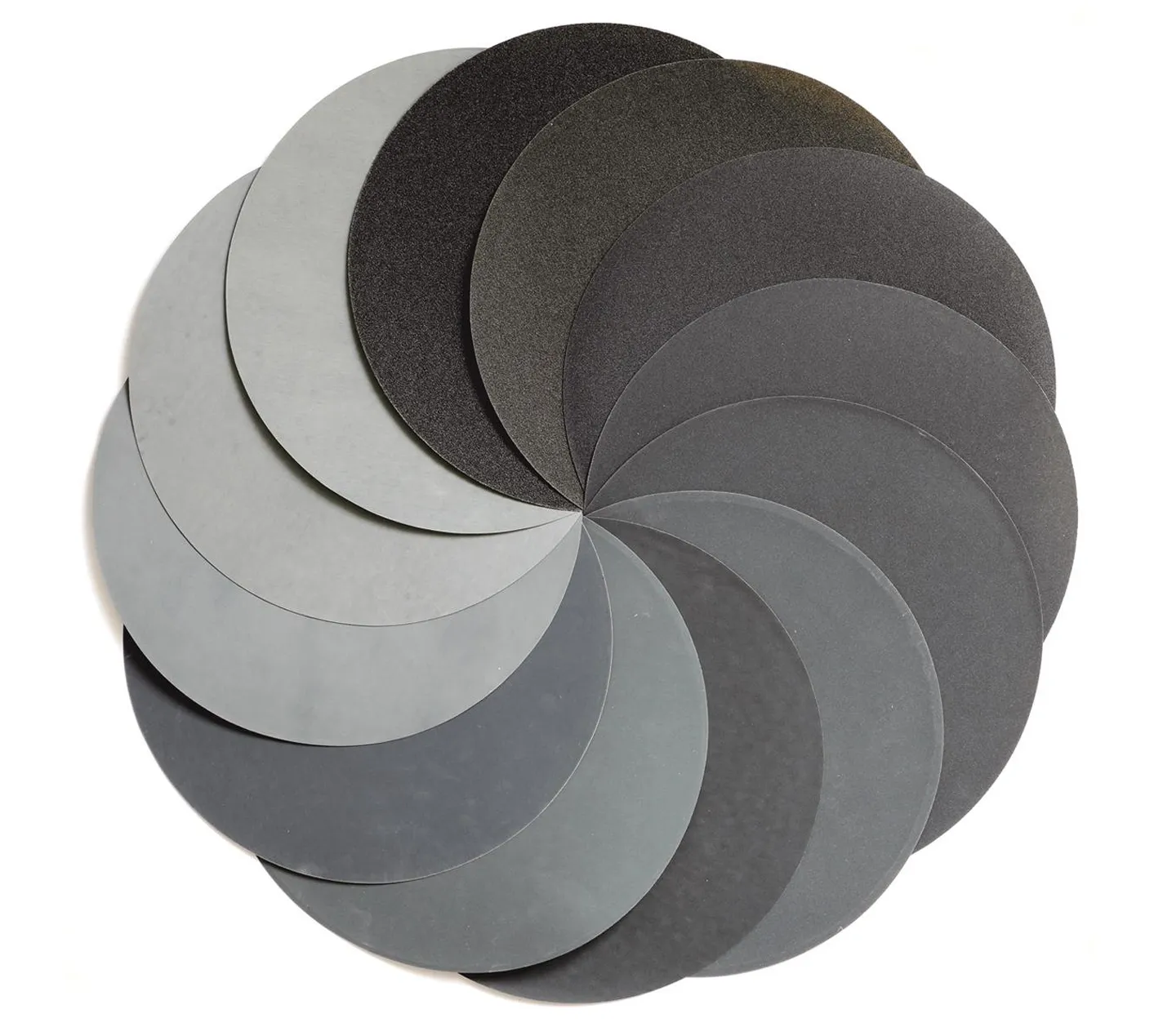
Metallographic SandpaperMetallographic sandpaper is a traditional consumable used to grind specimens to the required section while gradually removing surface deformation layers. Three Key Factors Defining Sandpaper Quality - Grinding Efficiency
Made with advanced abrasives such as aluminum oxide and silicon carbide, and with tightly controlled grit sizes, the sandpaper delivers excellent grinding efficiency, reduces processing time, and ensures a more uniform deformation layer. - Economic Durability
Advanced sand-coating techniques extend the service life of the sandpaper, providing greater durability and cost-effectiveness. - Warp Resistance
The sandpaper demonstrates strong resistance to water warping. After wet grinding, it remains flat with minimal curling, ensuring consistent surface contact between the specimen and abrasives.
|  |
Buying Guide
| Name | Grit Size | Specifications | Package | Application |
|---|
| Metallographic emery paper (water-resistant) | P120, P180, P240, P400, P600, P800, P1000, P1200, P1500, P2000, P2500, P3000, P4000 | 220x280 Rectangle | 100Piece/box | Black silicon carbide, evenly distributed abrasive particles, sharp grinding, durable and long-lasting |
| ø200 PSA backed |
| ø200 PSA backed |
| ø250 Plain backed |
| ø250 PSA backed |
| ø300 Plain backed |
| ø300 PSA backed |
Grinding Effect Display
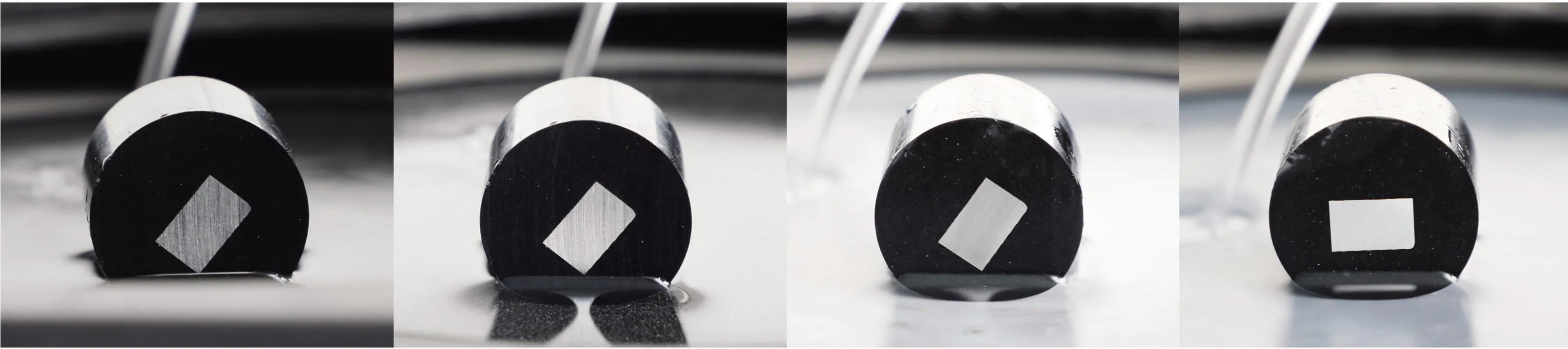 |
Step 1
Select:P120/P180/P240 | Step 2
Select:P400/P600/P800 | Step 3
Select:P1000/P1200/P1500 | Step 4
Select:P2000/P2500/P3000 |
Polishing FabricThe spaces between fabric fibers hold polishing micro-powder, allowing partial exposure of the abrasive to create a grinding effect. These gaps also retain lubricants, helping maintain proper lubrication and preventing overheating of the sample surface. The wet friction between the fibers or fabric nap and the sample surface produces a smoother, brighter finish. Polishing fabric selection depends on the hardness of the material being processed: - Soft materials: Use soft, thick polishing cloths.
- Hard materials: Use compact, thin polishing cloths.
Our precision polishing fabrics are designed with carefully selected materials to ensure excellent compatibility with abrasive particles. This enhances abrasive retention, increases durability, and improves polishing efficiency. | 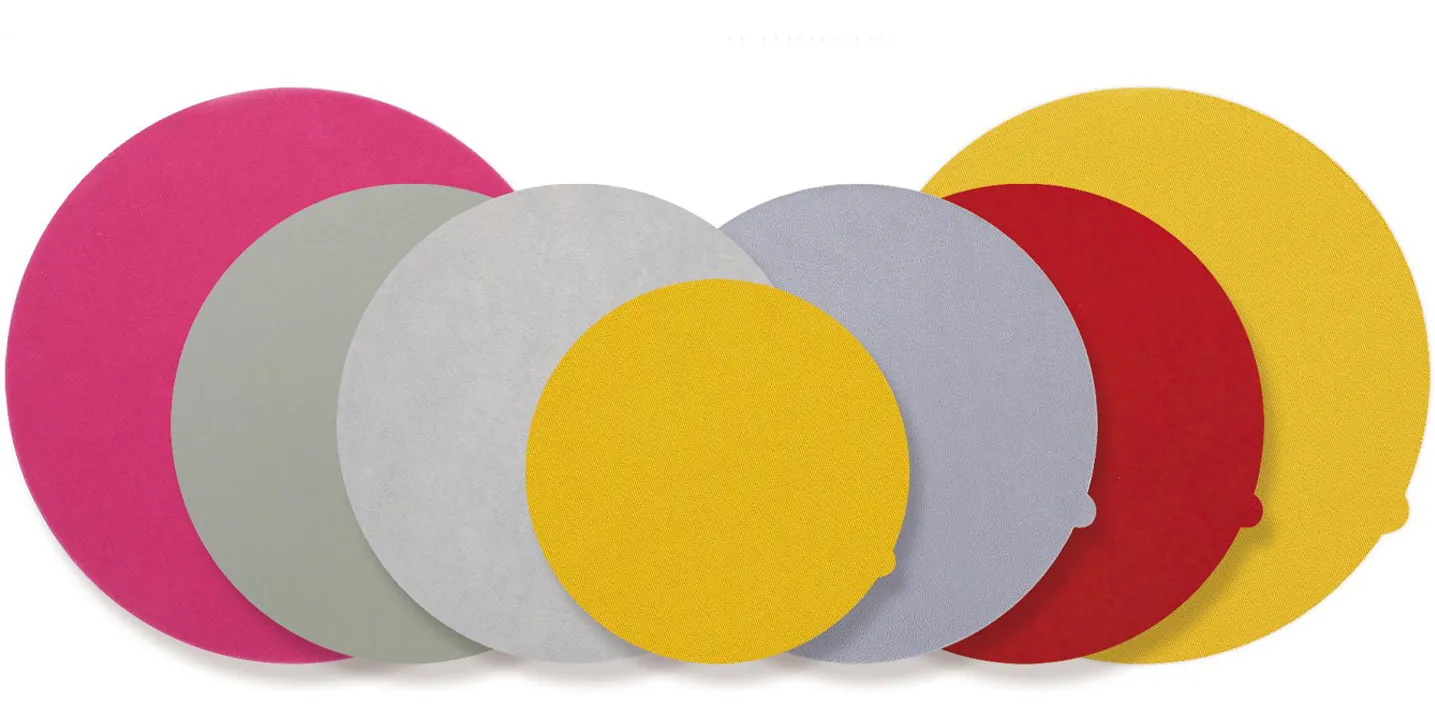 |
Purchase Guide
| Product name | Specification | Application |
|---|
| Coarse polishing 1 | Φ200 Φ250 Ф300 | Pre-polishing harder and brittle materials, pre-polishing batch samples |
| Coarse polishing 2 | For first-level rough polishing of steel materials, non-ferrous metals, and cemented carbide |
| Coarse polishing 3 | For fine polishing of soft materials, such as aluminum, magnesium, copper and other materials or polishing of steel materials |
| Fine/medium polishing 1 | For steel, hard metals, metal alloys, metallographic sections or high-precision material polishing |
| Fine/medium polishing 2 | For polishing of steel, hard metals, metal alloys, metallic metallographic sections or high-precision materials |
| Fine/medium polishing 3 | For polishing commonly used steel |
| Fine/medium polishing 4 | For steel, hard metals, metal alloys, metallographic slices or high-precision material polishing |
| Fine/medium polishing 5 | Good material adaptability, suitable for almost all materials between coarse polishing and fine polishing |
| Fine/medium polishing 6 | For polishing steel materials or polishing electronic circuit boards, copper, aluminum, magnesium and other materials |
| Fine/medium polishing 7 | For polishing steel, metal alloys, non-metals, polymers, ceramics, electronic components, heat-treated surfaces, metallographic slices and other materials |
| Fine/medium polishing 8 | Fine polishing of soft materials |
| Fine/medium polishing 9 | Used for polishing of glass electrodes, carbides, non-metallic metallographic slice materials and fine polishing and intermediate polishing of steel materials |
| Final polishing 1 | Suitable for final polishing of non-ferrous metals, copper, aluminum, etc., and microelectronic materials |
| Final polishing 2 | For precision mirror polishing of ferrous metals, non-ferrous metals, coatings, plastics, polymers, soft materials and medium hard materials |
| Final polishing 3 | For polishing non-ferrous metals, optical fibers, crystal gemstones, optical glass, metallographic slices and other materials |
Key Points of Metallographic Sample Preparation Process
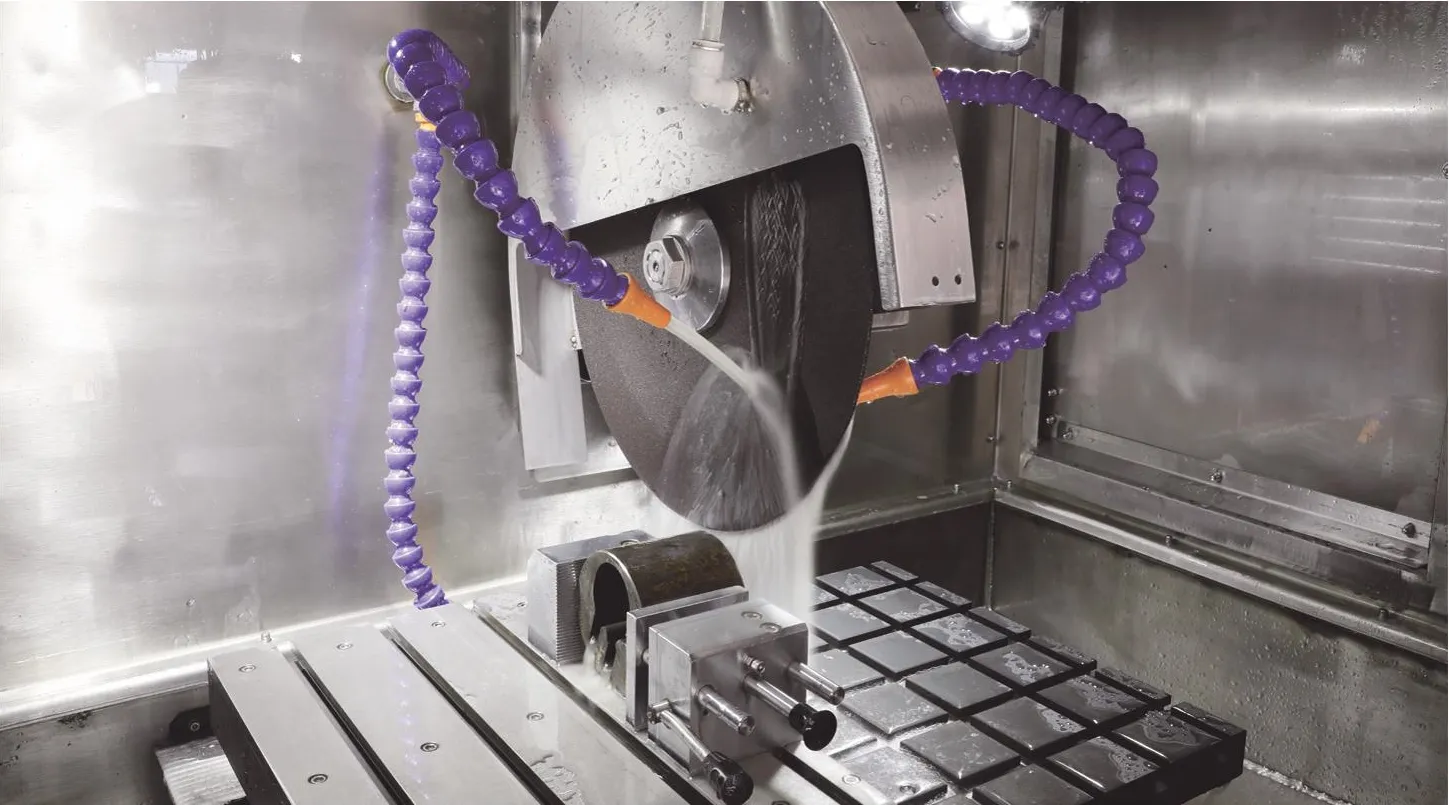 | Cutting and Sampling The sample preparation process consists of several key steps, each requiring precision to ensure reliable results. In metallographic analysis, preparation generally involves four stages: - Cutting and Sampling
- Embedding Samples
- Mechanical Sample Preparation
- Sample Inspection
Cutting and sampling is the first stage, where the specimen is separated from the bulk material and trimmed to the appropriate size for further processing. This step is critical to preserve the structural integrity of the sample and minimize deformation that could affect subsequent analysis. |
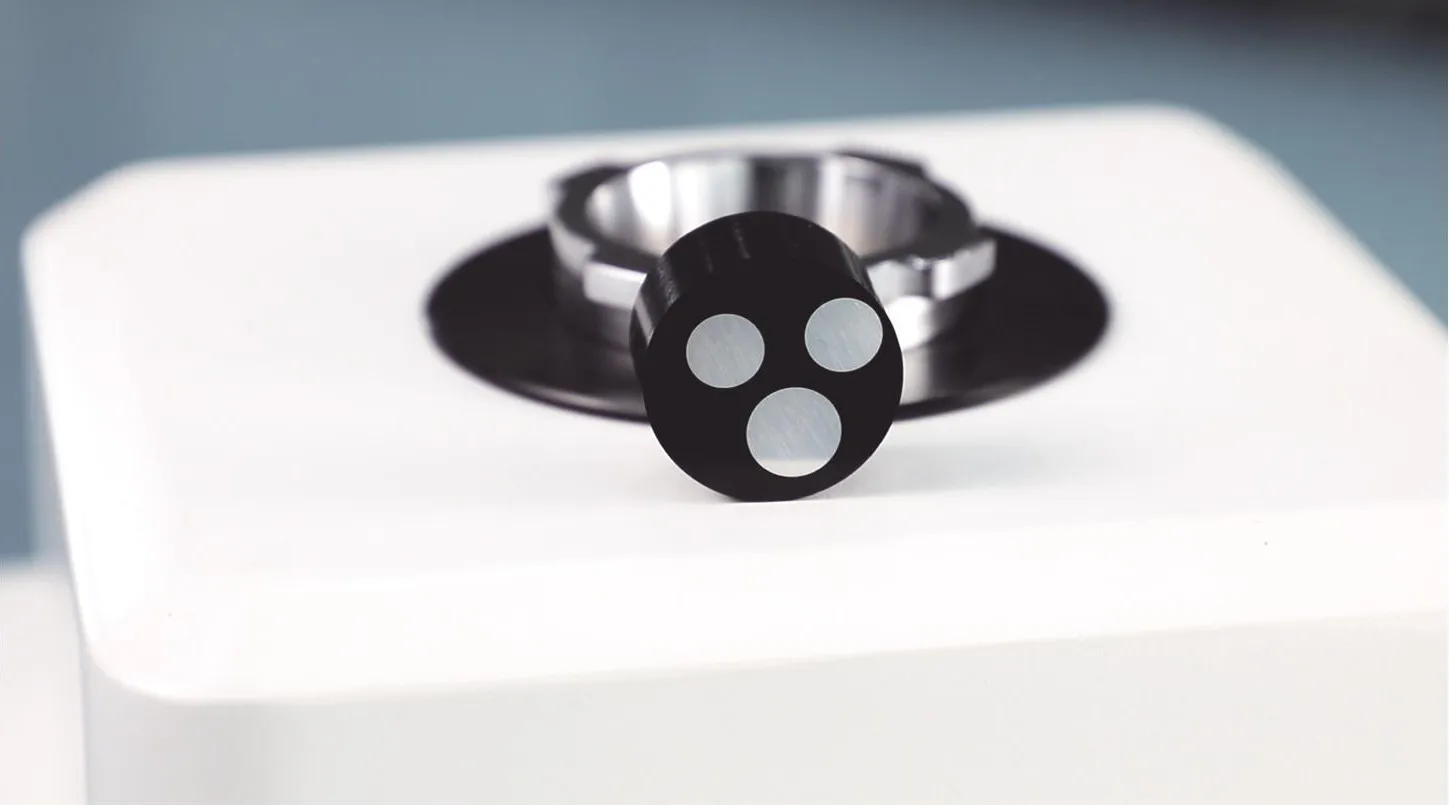 | Inlaid Sample For metallography, the most suitable cutting method is wet wheel cutting, as it minimizes damage while maintaining efficiency. The cutting blades used are composed of abrasive material and adhesive, and their composition should be selected based on the hardness and toughness of the material being cut. Choosing the appropriate blade ensures minimal surface deformation, good flatness, and faster preparation of samples with reliable results. |
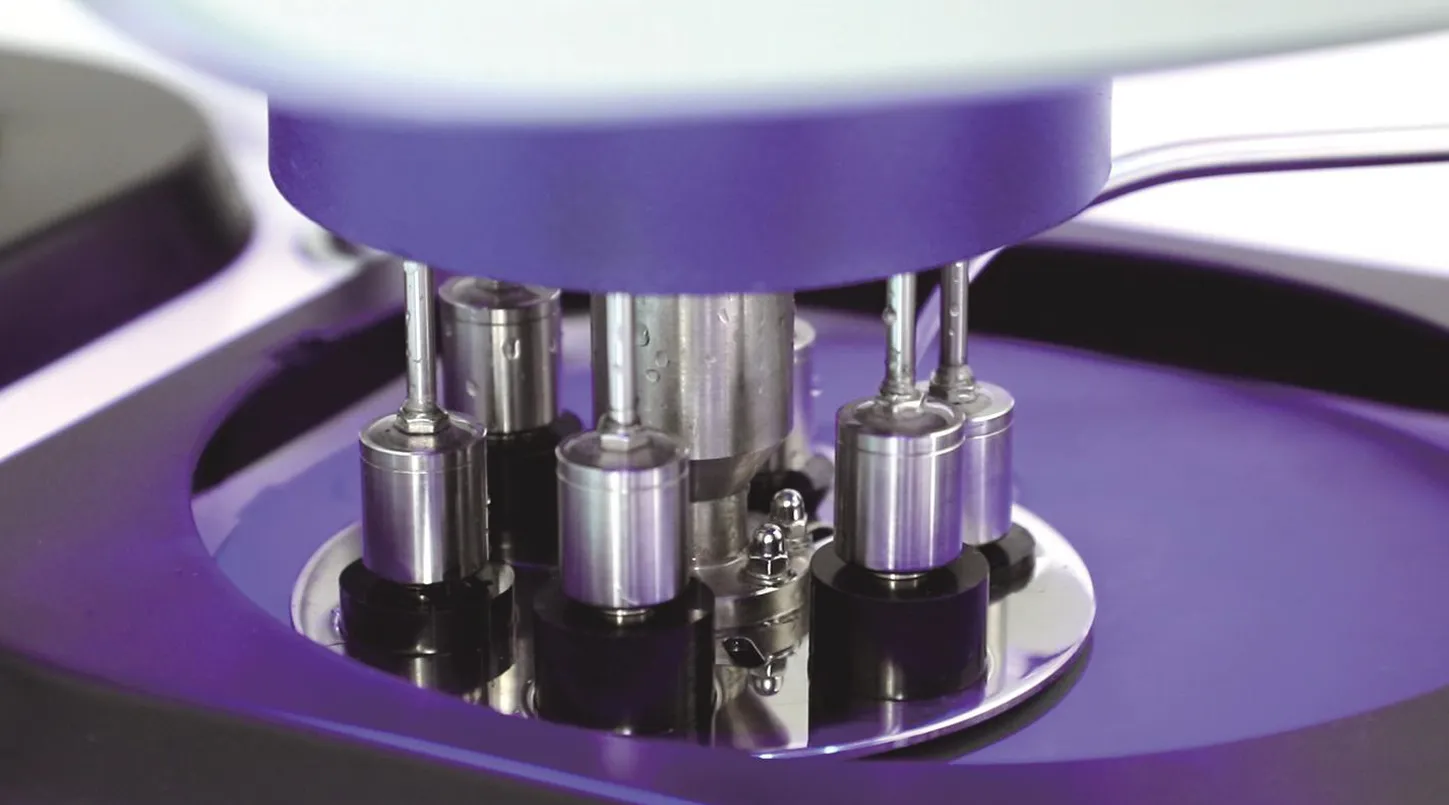 | Grind The sample is embedded in resin to improve handling and enhance the overall quality of preparation. Embedding is essential for specimens that require edge or surface protection. Before embedding, the sample must be thoroughly cleaned to remove contaminants and ensure proper bonding between the specimen and the resin. Embedding methods are generally divided into two types: - Hot Embedding: Best suited for processing large batches of samples. It produces specimens of high quality with uniform size and shape in a short time. Hot embedding resin is typically more cost-effective, but it requires an embedding machine.
- Cold Embedding: Ideal for processing multiple samples at once or for individual specimens. Cold resin can also be used with vacuum impregnation techniques.
|
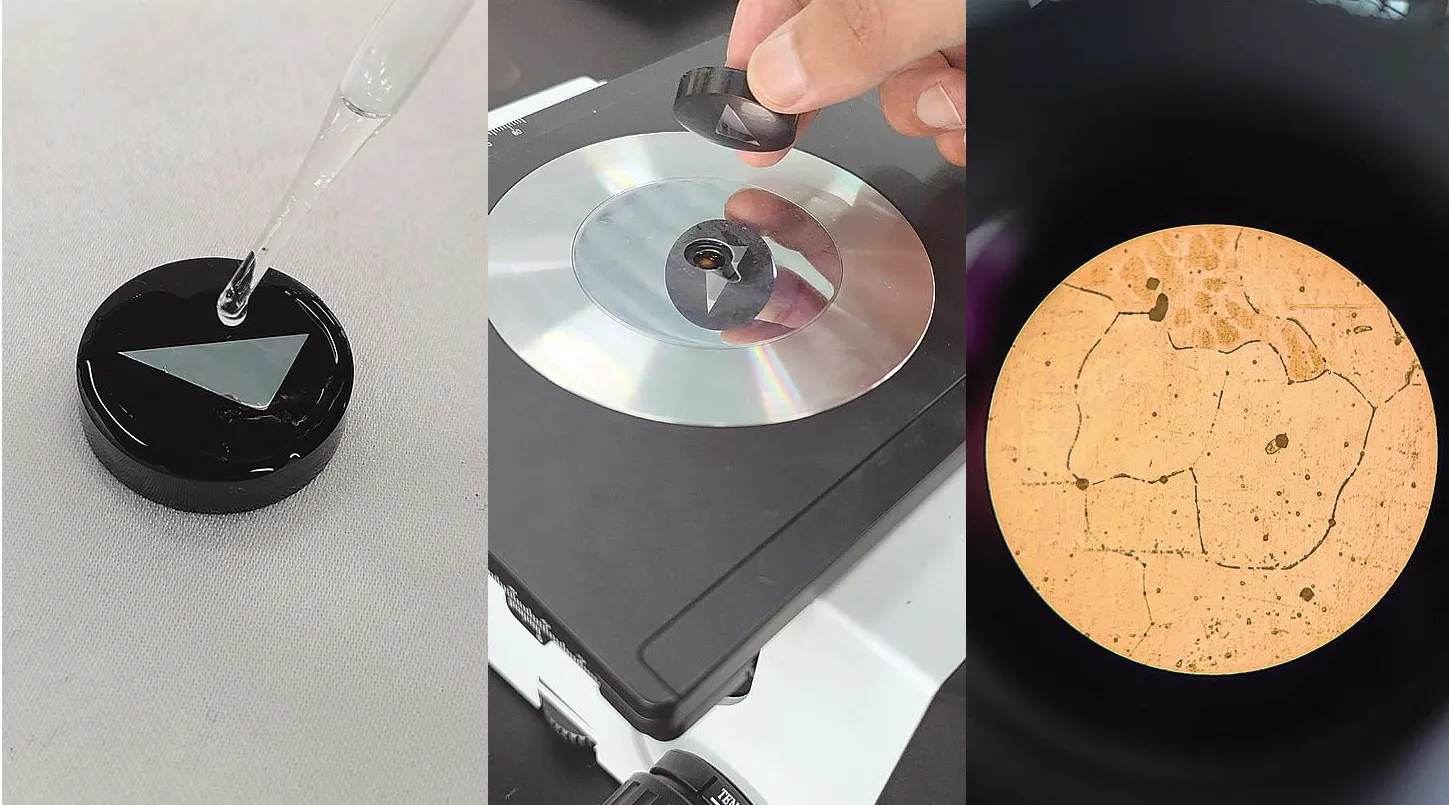 | Corrosion Samples Mechanical sample preparation involves two main steps: grinding and polishing. A. Grinding
The goal of grinding is to achieve a flat surface with minimal damage, so that any remaining imperfections can be removed quickly during polishing. Grinding is performed in two stages: coarse grinding and fine grinding. - Coarse grinding ensures that all samples have a uniform surface by using coarse, fixed abrasive particles to rapidly remove material.
- Fine grinding refines the surface but may cause slight deformation, which will be corrected during polishing.
B. Polishing
Polishing is carried out to eliminate the damage left behind from grinding. It is typically divided into two methods: diamond polishing and oxide polishing. - Diamond polishing uses diamond abrasives to produce the smoothest surface in the shortest time.
- Oxide polishing is used for particularly soft or tough samples, where diamond polishing may not be sufficient.
After polishing, the tested area becomes reflective. To clearly observe the tissue structure of the sample, the polished surface must first be etched. |
Common Chemical Corrosives
| Component | Time requirements | Application |
|---|
1-5mL nitric acid
100mL alcohol | A few seconds-One minute | Carbon steel, alloy steel, cast iron |
4g of bitter acid
100mL of alcohol | A few seconds-A few minutes | Display subtle organization |
5mL hydrochloric acid
1g picric acid, 100mL alcohol | A few seconds-One minute | Austenitic grains, tempered martensite |
15mL hydrochloric acid
100mL alcohol | A few minutes | Oxidation method grain size |
2g of bitter acid, 25g of sodium hydroxide
100mL of water | Boil for 15 minutes | Carbide staining, ferrite non staining |
3 parts hydrochloric acid
1 part nitric acid | 24 hour immersion method | Austenitic and chromium nickel alloys |
10mL hydrochloric acid, 3mL nitric acid
100mL alcohol | Immersion method for 2-10 minutes | High speed steel |
3-5g of bitter acid
100mL of alcohol | Immersion method for 10-20 minutes | Aluminium alloy |
Hydrofluoric acid 2mL, hydrochloric acid 3mL
nitric acid 5mL, water 95mL | Etching method for 5-10 minutes | Aluminum and aluminum alloy materials |
Hydrochloric acid 2-5mL
alcohol 100mL | A few seconds - A few minutes | Babbit alloy |
5g ferric chloride, 50mL hydrochloric acid
100mL water | A few seconds - A few minutes | Pure copper, brass, bronze |
| Mix 30% hydrogen peroxide and 20% ammonia solution in a 1:1 ratio | 5-6 seconds | Silver and alloys |
The most commonly used etchant is 4% nitric acid in alcohol, suitable for general steel and many non-ferrous metals. However, some materials require specialized etchants. For example, tungsten may need a mixture of lactic acid and hydrofluoric acid, or potassium ferrocyanide. Materials with high corrosion resistance often require picric acid (an explosive substance).
After etching, rinse the sample with alcohol and blow dry with a hair dryer. The prepared sample can then be placed under a metallographic microscope for observation.
Metallographic Preparation Theory & Method
Metallographic specimen preparation is the material science process of transforming a raw sample into an artifact-free, specular face suitable for microscopic examination. The fundamental theoretical rule is that every preparation step must completely eliminate the deformation and surface damage created by the previous step, while introducing a progressively shallower damage layer of its own.
Achieving an accurate microstructural view requires selecting Qualitest metallographic consumables, including specialized abrasive cutoff wheels, thermosetting mounting compounds, diamond suspensions, and fine polishing cloths, so that residual scratches and smearing are far smaller than the grain boundaries being analyzed.
Consumable Selection Across the 5 Preparation Stages
Specimen preparation advances through five interconnected stages where consumable performance directly determines sample quality. Improper consumable selection in an early stage introduces deep mechanical damage that cannot easily be corrected later.
| Stage | Preparation Method | Primary Consumables Applied | Key Consumable Specifications & Functions |
|---|
| 1. Sectioning | Abrasive cutting without thermal alteration or structural deformation | Resin-bonded cutoff wheels, electroplated/sintered diamond discs, eco-friendly cooling fluid | Resin wheels for general metals; diamond discs (such as φ100x0.4mm or φ200x1mm) for hard and brittle alloys; synthetic coolants to prevent heat damage |
| 2. Mounting | Resin encapsulation for edge preservation and automated handling | Thermosetting phenolic powders, hard epoxy resins, castable acrylics, potting molds | Phenolic powders for general mounting; mineral-filled epoxies for zero-shrinkage edge retention; cold acrylics for heat-sensitive samples |
| 3. Grinding | Sequential planar abrasion to remove sectioning damage | Silicon carbide (SiC) abrasive papers, rigid DG diamond grinding discs | Coarse-to-fine SiC papers (120 to 1200 grit) or DG diamond discs to flatten the face and remove sub-surface deformation |
| 4. Polishing | Mechanical scratch removal to achieve a mirror finish | Monocrystalline/polycrystalline diamond suspensions, colloidal silica, alumina slurries, cloths | Polycrystalline diamond (0.25 to 9 micron) for rapid cutting; colloidal silica for final oxide polishing; silk or velvet cloths |
| 5. Etching | Chemical contrast enhancement of grain boundaries | Formulated chemical reagents, electrolytic solutions, surface rinses | Acid etchants and electrolytic fluids formulated to reveal phase boundaries without staining or pitting |
Abrasive and Polishing Consumable Dynamics
Consumable selection relies on matching abrasive hardness, carrier fluids, and backing surfaces to the specific physical response of the material:
- Grinding Abrasives & Coolants: Silicon carbide papers and diamond grinding discs perform progressive stock removal. Utilizing eco-friendly cooling and lubricating fluid dissipates friction heat, flushes swarf away from the abrasive face, and protects susceptible metals against flash rusting during sectioning and grinding.
- Diamond Suspensions & Slurries: Polycrystalline diamond suspensions offer sharp, multi-edged micro-fracturing particles that cut faster and cleaner than monocrystalline varieties, making them ideal for tough alloy steels and hard intermetallics. Monocrystalline diamond fluids provide cost-effective stock removal for softer non-ferrous metals.
- Final Polishing Agents: Sub-micron colloidal silica (0.05 micron) and fine alumina slurries combine gentle mechanical action with mild chemical activity, removing the final sub-surface deformation layer to expose true grain boundaries for optical or electron inspection.
- Polishing Cloth Backings: Napless woven silk or synthetic cloths maintain planarity and prevent rounded sample edges during early diamond polishing. High-nap velvet cloths cushion final fine abrasives, wiping away remaining scratch lines on soft materials without pulling out delicate inclusions.
Consumable Troubleshooting and Artifact Prevention
Selecting improper consumables or using incorrect parameters creates distinct preparation flaws that obscure true microstructural features:
- Edge Rounding: Caused by soft, high-shrinkage mounting resins or thick, high-nap polishing cloths. Solution: Switch to hard, mineral-filled epoxy mounting resins and flat, napless woven polishing cloths.
- Surface Smearing: Occurs when polishing soft, ductile metals with insufficient lubrication or worn abrasive discs. Solution: Increase diamond lubricant dosing, decrease downward force, or finish with colloidal silica slurries.
- Inclusion Tailing ("Comet Tails"): Results from soft polishing cloths yielding under pressure around hard particles. Solution: Use rigid backing discs, polycrystalline diamond suspensions, and low-nap silk cloths.
- Staining and Pitting: Caused by delayed drying or aggressive chemical reagents lingering in shrinkage gaps. Solution: Use gap-free epoxy mounting resins and flush immediately with fast-evaporating alcohol rinses.
Using properly formulated Qualitest metallographic consumables across every phase guarantees that each step successfully removes prior deformation while leaving a clean, representative surface ready for microscopic evaluation.
