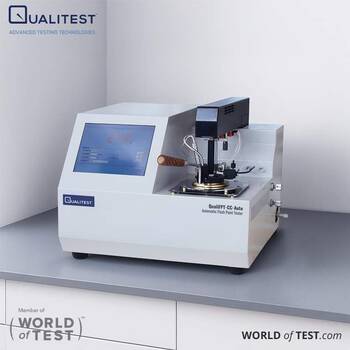
เครื่องทดสอบจุดวาบไฟอัตโนมัติ – Pensky-Martens Closed Cup
Qualitestเครื่องทดสอบจุดวาบไฟอัตโนมัติ QualiFPT™-CC-Auto ของเราเป็นเครื่องทดสอบจุดวาบไฟอัตโนมัติล้ำสมัยที่ออกแบบมาเพื่อการกำหนดจุดวาบไฟของผลิตภัณฑ์ปิโตรเลียมอย่างแม่นยำและทำซ้ำได้ โดยใช้วิธีถ้วยปิด Pensky-Martens ซึ่งเป็นไปตามมาตรฐาน ASTM D93 อย่างครบถ้วน
เครื่องมือขั้นสูงนี้มอบโซลูชันที่ปลอดภัย เชื่อถือได้ และอัตโนมัติเต็มรูปแบบสำหรับห้องปฏิบัติการและอุตสาหกรรมที่ดำเนินการควบคุมคุณภาพ การจำแนกประเภทผลิตภัณฑ์ และการทดสอบการปฏิบัติตามข้อกำหนดสำหรับของเหลวที่ติดไฟได้และติดไฟได้

การทดสอบจุดวาบไฟคืออะไร?
จุดวาบไฟของวัสดุคืออุณหภูมิต่ำสุดที่วัสดุจะปล่อยไอออกมาเพียงพอที่จะจุดติดไฟในอากาศเมื่อมีแหล่งกำเนิดไฟ จุดวาบไฟเป็นพารามิเตอร์ที่สำคัญในการกำหนดระดับความไวไฟและความปลอดภัยของเชื้อเพลิง น้ำมัน ตัวทำละลาย และสารระเหยอื่นๆ
ข้อมูลจุดวาบไฟมีความจำเป็นสำหรับ:
- การจำแนกประเภทและการติดฉลากวัตถุอันตราย
- การรับประกันการปฏิบัติตามกฎระเบียบการขนส่งและความปลอดภัย
- การรับประกันคุณภาพในอุตสาหกรรมการกลั่นปิโตรเลียม น้ำมันหล่อลื่น สารเคมี และสารเคลือบผิว
วิธีถ้วยปิด Pensky-Martens – ASTM D93
มาตรฐาน ASTM D93 ระบุถึงวิธี Pensky-Martens Closed Cup ในการกำหนดจุดวาบไฟของของเหลวที่มีความหนืดสูงกว่า 5.5 mm²/s (cSt) ที่ 40°C หรือของเหลวที่มีของแข็งแขวนลอยหรือมีแนวโน้มที่จะก่อตัวเป็นฟิล์มบนพื้นผิว
วิธีการนี้มักใช้สำหรับ:
- น้ำมันเชื้อเพลิง (ดีเซล ผสมไบโอดีเซล)
- น้ำมันหล่อลื่น
- ตัวทำละลาย
- สีและเคลือบเงา
- ของเหลวที่มีความหนืดหรือเป็นของแข็งอื่น ๆ
ASTM D93 นำเสนอวิธีการเชิงขั้นตอนสามวิธี:
- ขั้นตอนที่ A: สำหรับเชื้อเพลิงและของเหลวที่มีจุดวาบไฟระหว่าง 40°C และ 360°C
- ขั้นตอนที่ B: สำหรับวัสดุที่มีฟิล์มบนพื้นผิวหรือวัสดุที่มีแนวโน้มที่จะเกิดการเกาะตัวของผิวหนัง
- ขั้นตอน C: สำหรับส่วนผสมไบโอดีเซลและส่วนผสมเชื้อเพลิงอื่น ๆ ที่กำหนด
เครื่อง QualiFPT™-CC-Auto ของเราสามารถใช้งานกับทั้งสามขั้นตอนได้ด้วยระบบควบคุมอุณหภูมิที่แม่นยำ การจุดระเบิดอัตโนมัติ และพารามิเตอร์การทดสอบที่ตั้งโปรแกรมได้
การใช้งาน
- อุตสาหกรรมปิโตรเลียมและปิโตรเคมี – การทดสอบเชื้อเพลิง น้ำมันพื้นฐาน น้ำมันหล่อลื่น
- สีและสารเคลือบผิว – การตรวจสอบจุดวาบไฟของตัวทำละลาย
- ยาและสารเคมี – การประเมินลักษณะการติดไฟ
- การปฏิบัติตามข้อกำหนดด้านการขนส่งและความปลอดภัย – การรับรองว่าวัสดุต่างๆ เป็นไปตามข้อกำหนดด้านจุดวาบไฟตามกฎหมาย
- ห้องปฏิบัติการสิ่งแวดล้อมและคุณภาพ – การจำแนกวัสดุแบบมาตรฐาน
เพิ่มประสิทธิภาพการทดสอบความปลอดภัยในห้องปฏิบัติการของคุณและรับประกันการปฏิบัติตามข้อกำหนดด้านกฎระเบียบด้วยความแม่นยำและระบบอัตโนมัติของเครื่องทดสอบจุดวาบไฟอัตโนมัติ QualiFPT™-CC-Auto
คุณสมบัติหลักของเครื่องทดสอบจุดวาบไฟอัตโนมัติ QualiFPT™-CC
- การทำงานแบบอัตโนมัติเต็มรูปแบบโดยมีผู้ปฏิบัติการเข้ามาแทรกแซงน้อยที่สุด
- เป็นไปตามมาตรฐาน ASTM D93, ISO 2719, IP 34 และมาตรฐานสากลที่เกี่ยวข้อง
- เหมาะสำหรับของเหลวไวไฟและผลิตภัณฑ์ปิโตรเลียมหลากหลายชนิด
- คุณสมบัติความปลอดภัยที่เพิ่มขึ้น รวมถึงการป้องกันอุณหภูมิเกินและการจุดระเบิดแบบปิด
- อินเทอร์เฟซหน้าจอสัมผัสพร้อมความสามารถในการจัดเก็บและส่งออกข้อมูล
- รอบการทดสอบอย่างรวดเร็วและความสามารถในการทำซ้ำสูงสำหรับห้องปฏิบัติการที่มีปริมาณงานสูง
ลักษณะการทำงาน
- มีคอมพิวเตอร์ฝังในตัวพร้อมจอสัมผัส LCD สีขนาด 8 นิ้วและอินเทอร์เฟซภาษาอังกฤษทั้งหมด
- แสดงข้อมูลแบบเรียลไทม์ รวมถึงจุดวาบไฟที่คาดไว้ มาตรฐานที่เกี่ยวข้อง จุดวาบไฟสูงสุด ความไวในการตรวจจับ และสถานะการทดสอบ
- รองรับการควบคุมอัตโนมัติสำหรับอัตราการทำความร้อน การจุดระเบิด การประเมินผล การทำความเย็น และอื่นๆ
- ใช้มอเตอร์สเต็ปเปอร์ในการกวน ช่วยให้มั่นใจถึงความเร็วที่เสถียรและแม่นยำ สอดคล้องตามมาตรฐาน ASTM D93 อย่างสมบูรณ์
- จัดเก็บผลการทดสอบได้สูงสุด 500 รายการ สามารถถ่ายโอนข้อมูลไปยังระบบ LIMS ได้
- มีตัวเลือกทั้งการจุดระเบิดด้วยไฟฟ้าและแก๊ส
The Pensky-Martens Closed Cup Method
The QualiFPT™-CC-Auto Automatic Flash Point Tester flawlessly executes the exact science behind the Pensky-Martens Closed Cup method. This specific scientific procedure determines the exact temperature where liquid vapors ignite inside a sealed environment.
By strictly controlling the heat ramp and utilizing an internal stepper motor to keep the stirring rate completely uniform, the procedure eliminates temperature lag. A highly responsive micro thermocouple detector captures the exact millisecond of the flash, making the physical reaction incredibly predictable.
Here is how the automated testing process handles the physical chemistry:
The Closed-Lid Environment
You pour your liquid sample into a sealed brass cup. As the system warms the liquid, the integrated stepper motor continuously spins the paddle, keeping the fluid moving smoothly. This constant motion stops thermal gradients from forming, forcing the gaseous vapors to gather evenly inside the small air pocket at the top of the chamber.
The Ignition Point
The actual flash point is simply the lowest temperature (this model handles anywhere from 40 to 300°C) where a brief fire occurs when the shutter slides open. The machine introduces either an electronic or gas ignition source, and the micro thermocouple automatically registers the chemical reaction, completely removing visual guesswork.
Barometric Pressure Adjustments
Daily weather fluctuations heavily alter vapor pressure and throw your numbers off. The internal computer mathematically adjusts the results to standard atmospheric pressure (101.3 kPa), ensuring your data remains absolutely correct whether your laboratory sits at sea level or high altitude.
Methodology Standards and Crucial Variables
To ensure the testing data satisfies rigorous regulatory audits, this methodology executes standardized procedures like ASTM D93 (fully supporting Procedures A, B, and C), EN ISO 2719, and IP 34. The procedure demands a highly specific, steady heating crawl, which is why managing the following variables is absolutely critical:
- Pacing the Temperature: If you rush the heat application, the chemical data falls apart. For instance, heating raw sulfur too fast can drop its measured flash point from a warm 207°C all the way down to 167°C, which creates a massive error. The internal programming applies a rate of 5 to 6°C per minute for Method A, or a much slower 1 to 1.5°C per minute for Method B. Keeping the temperature climb strictly restrained ensures the liquid and the air above it stay perfectly matched.
- การกวนอย่างต่อเนื่อง: Keeping the liquid moving actively stops localized hot spots from skewing the final readings. The precision stepper motor handles this effortlessly until the exact moment of the ignition trial.
- System Uncertainty: Minute errors originating from the heat sensors, pressure gauges, and rounding calculations easily add up. The Automatic Flash Point Tester factors all of these variables together through the 8-inch color LCD touchscreen, computing a highly reliable final number while handling the ignition trials and automatic cooling entirely on its own.
เครื่องทดสอบจุดวาบไฟอัตโนมัติ – ข้อมูลจำเพาะทางเทคนิคของ Pensky-Martens Closed Cup
| พารามิเตอร์ | Specification |
|---|---|
| ช่วงการวัด | 40 300 ℃ ~ |
| เครื่องตรวจจับจุดวาบไฟ | ไมโครเทอร์โมคัปเปิล |
| ความเร็วในการทำความร้อน | วิธีการ: 5~6℃/นาที |
| วิธี B: 1~1.5℃/นาที | |
| วิธี C: 3.0±0.5℃/นาที | |
| เครื่องทำความร้อน | 220V 0.5KW (110V ก็มีจำหน่าย) |
| แหล่งก๊าซ | ก๊าซปิโตรเลียมเหลว/บิวเทน |
| ขนาดภายนอก | 384X418X328 (มม.) |
| น้ำหนัก | 15กิโลกรัม |